Moussem of Roses in Kelaat M’gouna
A Festival Unlike Anything Else
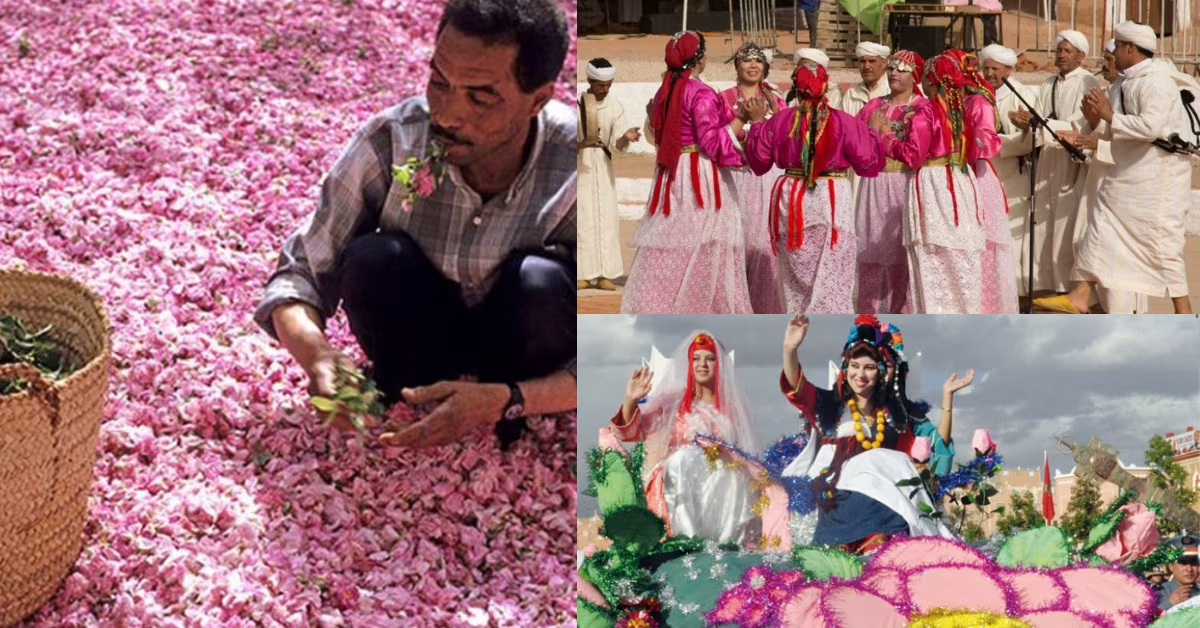
Picture this: thousands of rose bushes in full bloom stretching as far as the eye can see, Berber women in traditional dress parading through the midday heat, and hanging in the air, that heady, sweet scent of rose that clings to your clothes for days after. This is what happens every spring in Morocco's Valley of Roses, and most travellers have no idea it exists.
The Moussem of Roses is one of the country's most iconic festivals. Yet it remains largely off the radar for visitors who stick to the well-worn trail of Marrakech and Essaouira. That's a genuine shame, and a genuinely fixable mistake.
So, what exactly is a moussem?
In Morocco, a moussem is a traditional celebration, usually tied to religion, agriculture, or both at once. Think of it as a communal gathering, a moment for a region to come together, celebrate its rhythms, and share in something bigger than everyday life. The word itself comes from Arabic and roughly translates to "season" or "time of year": a natural marker in the life of a village or community.
The Moussem of Roses specifically celebrates the harvest of the Damask rose, a delicate variety that the Amazigh (Berber) communities of this region have been cultivating for centuries. But make no mistake: the rose isn't just a pretty symbol here. It's the economic engine of the entire valley, driving the production of rosewater, essential oils, and cosmetics that are exported and coveted around the world.
This is a festival rooted in real life, in the everyday reality of the people who live here. It was never designed for tourists, and that's precisely what makes it special.
What you'll see and experience
The undisputed highlight is the grand parade. Berber women in vivid, embroidered costumes move through the streets of Kelaat M'Gouna to the sound of musicians and dancers. The atmosphere is loud, joyful, alive. Kids absolutely love it.
Then comes the election of the Rose Queen, a moment the locals genuinely look forward to, where a young woman from the region is crowned amid cheering crowds. Yes, it's a little kitsch. Yes, it's completely joyful. And yes, that tension is entirely part of the charm.
Beyond the parade, the festival is essentially one enormous souk: stalls piled high with rosewater, essential oils, handmade cosmetics, Berber jewellery, and loose spices sold by the scoop. Take your time here. Wander, haggle gently, and chat with the artisans. These are often the best conversations you'll have all trip.
Don't skip the women's cooperatives, either. Several offer visitors a chance to watch traditional rosewater distillation up close, a rare and quietly moving experience that shows exactly how this industry sustains hundreds of local families. It's the kind of thing you can't find in a guidebook.
Where to go and when
One thing worth getting straight right away: the festival doesn't take place in Ouarzazate, despite what you might read elsewhere. It's held in Kelaat M'Gouna, a small town roughly 110 kilometres east of Ouarzazate, right in the heart of the Valley of Roses.
Getting there is straightforward enough. From Ouarzazate, it's about an hour and a half by road. From Marrakech, budget five to six hours, crossing either the Tichka Pass or the Telouet Pass depending on your route. Hiring a car is the most comfortable option, particularly if you're travelling with family. Shared taxis (grands taxis) do serve the area, but the schedules can be unpredictable.
Timing-wise, the festival usually falls in late April or early May. The exact dates shift slightly from year to year depending on when the roses actually bloom, and it runs for around three days. Check the specific dates in advance, as they're rarely confirmed far ahead. Ideally, plan to stay at least two nights to soak up the atmosphere without feeling rushed.
Practical things to sort before you go
Accommodation: Book early. During the festival, riads and guesthouses fill up fast. Kelaat M'Gouna has a handful of genuinely charming places to stay; Ouarzazate offers more choice if you'd prefer a bit more comfort and distance.
Budget: Expect to pay around €25 to €45 per night for decent accommodation, and roughly €8 to €10 per person for a sit-down meal at a local restaurant. Festival entry is free.
What to wear: May is hot, but dressing respectfully matters here. For men, lightweight trousers and a short-sleeved shirt work well. For women, a long dress or loose, breathable layers are both appropriate and genuinely more comfortable in the dust and heat. It's not about rules; it's about common sense and mutual respect.
Photography: Always ask before pointing your camera at someone, particularly women. A smile and a questioning look usually does the trick. Some people will say no, and that's completely their right. Accept it gracefully.
Language: Tamazight (Berber) and Darija (Moroccan Arabic) are what you'll hear on the streets. French is widely understood in shops and hotels, but learning even a handful of Darija phrases, such as choukran for thank you or la bas for "how are you", will go a long way and will genuinely be appreciated.
What else to do in the area
Kelaat M'Gouna sits in one of Morocco's most rewarding regions for exploration. Five stops worth combining with your festival visit:
Ouarzazate: Known as the "Hollywood of the Desert," this city is home to working film studios and the impressive Taourirt Kasbah. Less than two hours away, it's an easy and worthwhile addition to any itinerary.
Aït Ben Haddou: A UNESCO World Heritage ksar (fortified village) with sun-baked earthen towers that glow amber at sunset. Genuinely one of the most photogenic places in the country.
The Dadès and Todra Gorges: Two spectacular canyons, both accessible by car, offering landscapes that stop you mid-sentence. The Todra Gorge in particular, with sheer rock faces rising nearly 300 metres on either side, is breathtaking for visitors of all ages.
The Route of the Kasbahs: A driving itinerary linking fortified villages across palmeries and ochre valleys. You'll stop more than you plan to. That's the point.
Merzouga and the Erg Chebbi dunes: The great sand sea in eastern Morocco. A night under the stars in the Sahara, capping off a few days in the rose valley: it's hard to imagine a better travel one-two punch.
The Moussem of Roses has everything you want from travel: authenticity, colour, human connection, and a cultural grounding that you can actually feel. Nobody staged this for visitors. It was here long before tourism arrived, and it'll be here long after the tour groups move on.
If you're planning a spring trip to Morocco, shift your dates by a week, point yourself east, and let the valley work its magic. The smell alone is worth the detour.
Register
By entering your email address, you agree to receive our newsletters by email and you are aware of our Privacy Policy.