Explore the Stunning Valley of Roses in Morocco
Most people planning a trip to Morocco picture the same things: ancient medinas, rooftop riads, endless sand dunes. The Rose Valley rarely makes the shortlist. Which is a shame, because this is exactly the kind of place that lingers in your memory long after you've unpacked your bags.
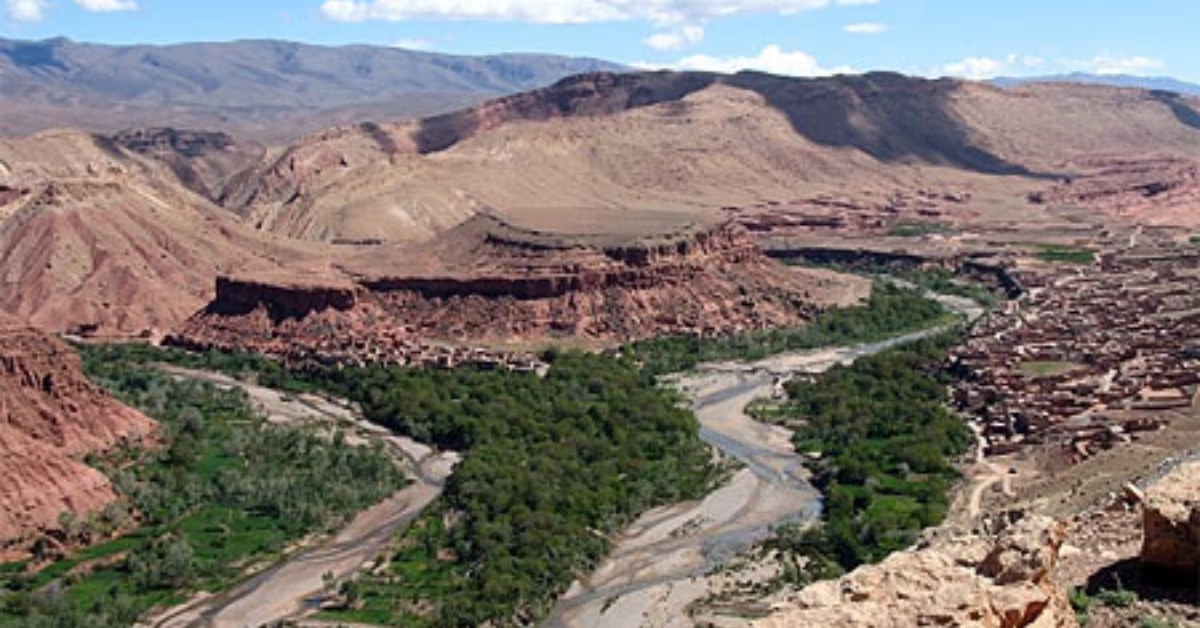
Tucked into the Dadès region between Ouarzazate and Boumalne, the valley is a genuine surprise. The landscape is raw and mineral, carved out by the High Atlas mountains, and running through all of it, kilometer after kilometer of rose bushes in bloom, looking like they have absolutely no business being there. It's one of those sights that makes you stop the car.
The Rose in Morocco: A Little Background
The rose grown here is not your average garden variety. It's the rosa damascena, the Damascus rose, brought to Morocco centuries ago by pilgrims and merchants returning from the Middle East. The Dadès Valley turned out to be the perfect home: high altitude to regulate temperatures, mountain water in abundance, and generous sunshine that intensifies the fragrance.
Since then, Berber families across the region have cultivated these roses from one generation to the next, passing down the craft the way you'd pass down a family recipe. The harvest is still done entirely by hand, early in the morning before the heat has a chance to damage the petals. It's painstaking, almost meditative work, and it pulls entire villages together for a few weeks every year.
Today, the Rose Valley is one of the world's leading producers of rosewater and rose essential oil. Not bad for a valley that most tourists couldn't have found on a map ten years ago.
What You'll See and Do Here
If you're visiting in April or May during the bloom, the landscape is something else entirely. The fields turn pale pink as far as you can see, the scent drifts through the air from early morning, and even kids who spent the entire drive glued to their screens will look up. The flowering window is short, two to three weeks at most, so if that's what you're coming for, plan accordingly.
Outside of bloom season, the valley still holds up. The Berber villages scattered along the road are welcoming and genuine, the ochre earthen kasbahs blend into the landscape as though they grew out of it, and the hiking trails nearby offer a real sense of just how wild and generous this terrain can be.
The women's cooperatives deserve a special mention. You can watch the traditional rosewater distillation process up close, a technique that has barely changed in centuries and is genuinely fascinating to see in action. It's also the best place to buy rosewater, essential oil, or rose-based cosmetics directly from the source, at fair prices and without a middleman. A word of advice: buy here rather than in the souks of Marrakech, where the same product will cost twice as much and the quality is sometimes questionable.
Then there's the Rose Festival, held every May in Kelaat M'Gouna, the valley's main village. Parades, live music, the crowning of the rose queen, artisan stalls: it's a joyful, colourful celebration that draws local families and international travellers alike. If your visit lines up with the festival, don't think twice about it.
Getting There and Getting Around
The Rose Valley sits around 200 kilometres east of Ouarzazate and roughly 530 kilometres from Marrakech. Driving from Marrakech is an experience in itself: the route crosses the Tichka Pass and rolls through scenery that justifies the six-hour journey on its own. From Ouarzazate, it's a much more manageable two hours, which makes it an easy add-on if you're already doing a southern circuit.
There's no direct public transport from the major cities. CTM buses serve Boumalne du Dadès from both Marrakech and Ouarzazate, and from there a local taxi gets you into the valley in about twenty minutes. Renting a car from Ouarzazate remains the most flexible and convenient option.
Best time to visit: April and May for the bloom and the festival, no question. Spring and autumn are pleasant the rest of the year. Summer can get hot, and winter nights are cold given the altitude.
How long to stay: One night at a minimum, two nights ideally. Long enough to visit the cooperatives, get out for a walk, and actually breathe the place in rather than just passing through.
Where to Stay
The accommodation scene has grown considerably in recent years, and there's now something for every budget and travel style.
Guesthouses and small charming riads are the best way to genuinely settle into the valley's atmosphere. Run mostly by local families, they offer warm hospitality, home-cooked Moroccan food, and that rare feeling of sleeping somewhere that actually has a soul. Kelaat M'Gouna and the surrounding villages have a solid selection, at prices that are very reasonable compared to what you'd pay in Marrakech for the same quality.
For families with children, guesthouses with a courtyard or garden are particularly well suited. The kids have room to move, the parents can relax, and breakfast on the terrace with a view over the rose fields is the kind of memory that sticks around.
Starcamp experiences are also available in the area for those who want to take the immersion a step further. A genuinely appealing option in spring when the nights are still mild.
One practical note: book ahead if you're coming during the bloom or the festival in April and May. The best places fill up weeks in advance, and it would be a real waste to end up sleeping in Boumalne because you left it too late.
What to Do Nearby
The Rose Valley fits naturally into a broader southern Morocco itinerary. Here are four stops worth building in.
The Dadès Gorges: An hour's drive north, the Dadès Gorges rank among the most dramatic landscapes in the country. Red rock cliffs dropping to the river below, hairpin bends climbing toward the top of the gorge, and guesthouses perched on the cliff face make this an unmissable detour.
The Todra Gorges: Around 80 kilometres to the east, the Todra Gorges are even more impressive. The rock walls reach 300 metres high and narrow to just a few metres across at the base. A geological spectacle that tends to stop people mid-sentence, kids included.
Ouarzazate: Known as the gateway to the desert, Ouarzazate is a natural stop before or after the valley. The Taourirt Kasbah, the film studios that have hosted Hollywood productions, and the particular atmosphere of a city sitting between mountain and desert make it worth more than a quick pass-through.
The Merzouga Desert: About three hours east, the Erg Chebbi dunes are what most people picture when they think of the Sahara. A night under the stars in a Berber camp, a camel ride at sunrise: the kind of experience people are still talking about years later.
The Rose Valley is one of those places that's hard to describe accurately, because what it offers is as much about the senses as it is about the sights. The scent of flowers in the early morning air, the light settling on the kasbahs at the end of the day, the ease with which locals invite you into something they've been doing their whole lives: none of that fits in a photograph.
Whether you're travelling as a couple, with kids in tow, or solo with a backpack and an open schedule, this valley has something real to give you. And unlike some corners of Morocco that have been thoroughly discovered, it still does so quietly, and on its own terms.
Register
By entering your email address, you agree to receive our newsletters by email and you are aware of our Privacy Policy.