Discover the costa beauty of Mirleft
Some places in Morocco you stumble upon by chance. A friend's offhand recommendation, a missed turn on the coastal road, a name you did not recognise on a map. That is usually how Mirleft begins. An unfamiliar word, a moment of curiosity, and then something that feels very much like a revelation.
This small village on the Atlantic coast, wedged between Tiznit and Sidi Ifni, has everything you look for when you want to get off the beaten track without sacrificing comfort or beauty. Dramatic cliffs, near-empty beaches, an evening light that makes you want to extend your stay by a week. And above all, an atmosphere that the big resort towns lost a long time ago.
Welcome to Mirleft. Go soon, before everyone else figures it out.
History, Character and Location
The village and its origins
Mirleft sits in the Souss-Massa region, roughly 170 kilometres south of Agadir and about thirty kilometres from Tiznit. The drive follows the ocean along a winding coastal road that sets the tone immediately: this is a place where the landscape takes up as much space as it wants.
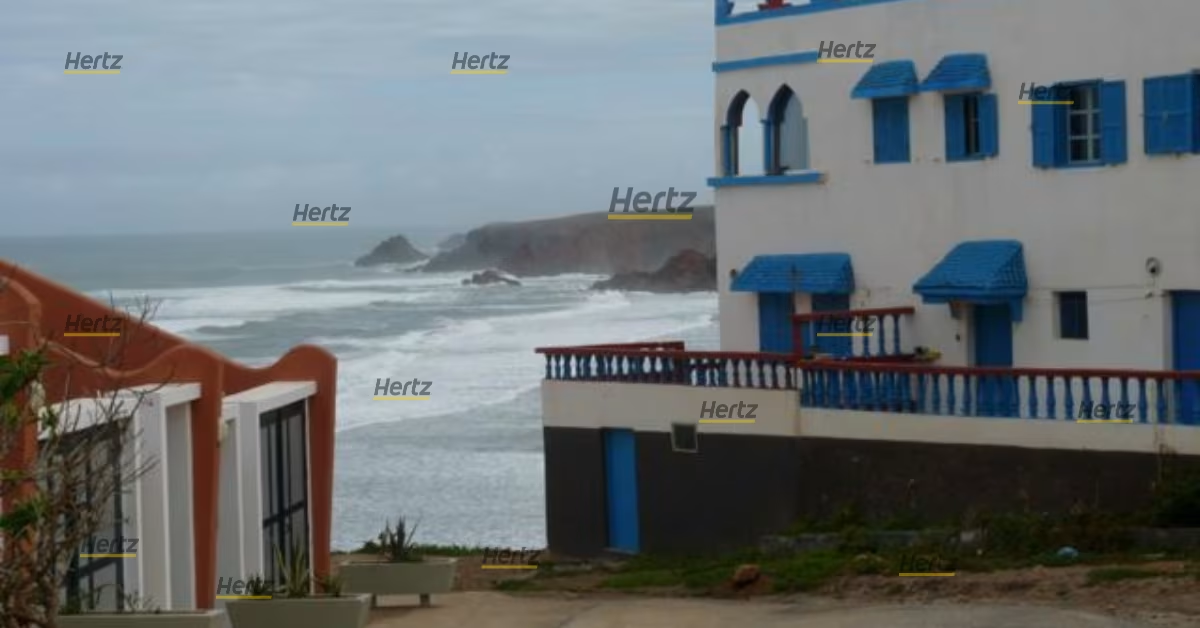
The village has deep Berber roots, anchored in this part of the Anti-Atlas where the mountains slope down toward the sea. During the colonial period, the Spanish left their mark here, most visibly in the form of a fort that still watches over the village and remains one of its most photographed features. White houses with coloured shutters, narrow lanes, terraces overlooking the Atlantic: the setting is simple and striking, and it has never needed retouching to be beautiful.
The atmosphere
Mirleft is a fishing village that has quietly welcomed alternative travellers, surfers looking for less crowded waves, and families in search of something beyond regimented sun loungers and hotel buffets. The result is a remarkably successful balance between local authenticity and an easy, unhurried kind of tourism.
This is not Agadir. There are no sprawling hotel complexes, no busy promenade, no tourist souk sold by the metre. What there is instead is a slow rhythm, residents who still greet strangers in the street, and a handful of guesthouses run by people who genuinely love their village. That is rarer than it sounds, and you feel it immediately.
What to Do in Mirleft
The beaches: the heart of any stay
Mirleft is, at its core, a sequence of beaches, each with its own personality, separated by cliffs and rocks that form natural coves of almost unreasonable beauty.
The Maison Bleue beach is the best known and most accessible. Framed by ochre cliffs, with water that turns a clear turquoise in good weather, it is ideal for family swimming and first surf lessons. The mood is relaxed, settling in is easy, and children can explore the rocks without parents tensing up at every wave.
The Fishermen's Beach is wilder and more authentic. Colourful boats pulled up on the sand, nets drying in the sun, fishermen returning in late morning with their catch: it is a living postcard, and it does not need any embellishment to be genuinely beautiful.
Khmiss Beach, a little further out, draws surfers and anyone wanting to put some distance between themselves and the crowd, modest as that crowd may be. The waves are stronger here, the landscape more raw and mineral, and the sunsets from this stretch of coastline are the kind you remember long after you get home.
For families with young children, the Maison Bleue or the beaches sheltered by the rocks are the better choice, where the current is calmer and keeping an eye on things is easier.
Things to do on land
Mirleft is more than its beaches, even if they would almost be enough on their own.
The cliffs edging the village offer walking trails that require no technical equipment and deliver views of the Atlantic that genuinely stop you in your tracks. Allow one to two hours for the main routes, more if you feel like getting pleasantly lost.
At low tide, the rocks reveal coves and natural caves you can explore on foot, children in tow and cameras out. It is the kind of activity that costs nothing and tends to be one of the strongest holiday memories.
The hinterland deserves a look too. The argan forests that are so characteristic of this part of Morocco stretch just a few kilometres inland. It makes for a fine short excursion: you can watch artisanal argan oil being produced the traditional way, and bring back a few bottles that will mean considerably more than a plastic keyring.
Where to Sleep and Eat
Accommodation
The accommodation in Mirleft reflects the village itself: modest in quantity, but often excellent in quality and genuine warmth. You will find mainly guesthouses and small riads run by local owners or by people who visited once and never quite left, which gives each address a real personality.
Value for money is consistently strong, noticeably better than what you find in the larger tourist cities. Families will find guesthouses offering adjoining rooms or entire apartments, which makes a significant difference when travelling with children. Couples will find ocean-view terraces that do all the work without trying. Solo travellers will find the convivial atmosphere of the smaller places makes meeting other travellers straightforward.
Book ahead in July and August. The best addresses fill up quickly.
Food and what to try
The food scene in Mirleft is simple, honest, and genuinely good. Fresh fish is the thing to eat here, which works out well when you are sitting on the Atlantic coast. Grilled sardines, sea bass in a tagine, prawns prepared simply with lemon and spices: you eat well, you eat local, and you do not spend a fortune doing it.
The cafes perched on the upper part of the village, with their open terraces facing the ocean, are the right place for a full Moroccan breakfast: warm msemen, argan honey, amlou (the local almond and argan oil spread that is worth the trip on its own), coffee or mint tea. For children, this is often a moment of genuine culinary discovery, because everything tastes good and the setting does half the work.
Give a wide berth to any place displaying a menu in five languages with laminated photographs. You will not eat your best meal there.
Practical Information
Getting to Mirleft
By car is by far the best option. From Agadir, allow around two hours along the coastal road, which is in good condition and consistently scenic. From Marrakech, plan for approximately five hours. Having a car also gives you the freedom to explore the isolated beaches and the countryside at your own pace.
By bus, connections exist from Tiznit and Agadir via CTM or regional services. It is doable, but less practical once you are there.
The best time to visit is spring (April, May) or autumn (September, October), when temperatures are comfortable, the sea is pleasant, and visitor numbers are still reasonable. Summer is lively but hotter and busier. Winter draws surfers, as the waves are at their best and the village returns to near-total quiet.
Allow a minimum of three nights to genuinely experience Mirleft. Five days is the sweet spot.
On the ground
A few things worth knowing before you go. Mobile coverage works well in the village but can be patchy on the more isolated beaches or inland. Bring cash: ATMs are scarce and small shops do not take cards. There is a pharmacy in the village, but for any serious medical need, Tiznit is the nearest town.
The coastal road between Tiznit and Sidi Ifni is beautiful but winding. Take your time, and avoid driving it at night if you are not familiar with the route.
What to See Nearby
Mirleft is an ideal base for exploring this whole stretch of Atlantic coastline. The surrounding area has a few surprises worth building in.
Sidi Ifni, the town that feels like somewhere else: Thirty kilometres to the south, Sidi Ifni is a former Spanish enclave with the look of an art deco ghost town: pastel-coloured colonial buildings, quiet streets, a wistful and oddly charming seafront. Half a day is enough, and it is clearly worth the short drive.
Tiznit and its silver souks: An hour to the north, Tiznit is Morocco's capital of Berber silver jewellery. The medina is small, easy to navigate, and the craftsmen still work in front of you in their workshops. It is the right place to bring back something with genuine value, and a pleasant stop with children.
The wild beaches along the coastal road: Between Mirleft and Sidi Ifni, the coastal road skirts beaches that are barely touched, reachable by dirt track. No signs, no vendors, just waves and sand. Stop when you feel like it. You will not regret it.
Souss-Massa National Park: An hour to the north, this understated nature reserve is home to the northern bald ibis, a rare species you can spot from the banks of the Oued Massa. A simple, transporting nature outing, well suited to families.
Mirleft is not a destination for everyone, and that is precisely what makes it worth something. It is not a showcase, it is not a packaged tourist product. It is a village that exists on its own terms and welcomes visitors with a quiet kind of generosity.
You will find beaches that rank among the finest on the Moroccan Atlantic coast, food that is unpretentious and genuinely satisfying, landscapes that need no filter, and that rare feeling of travelling somewhere that has not yet been smoothed and standardised for mass appeal.
If you are still on the fence, stop hesitating. Mirleft earns the detour, the drive, and the five days you will never regret spending there.
Register
By entering your email address, you agree to receive our newsletters by email and you are aware of our Privacy Policy.