
Imouzzer: Morocco’s Honey Village and Waterfalls
Some places in Morocco are not found by accident. Imouzzer is one of them. Tucked into the foothills of the Anti-Atlas, about an hour's drive from Agadir, this small Berber village lives at the pace of bees, springs, and palm trees, far from the noise of the big cities. No labyrinthine medina, no pushy vendors, no racket. Just a village that smells of honey and thyme, with waterfalls thrown in for good measure. A detour that many travellers miss entirely, and quietly regret afterwards.
Imouzzer: the village most visitors drive straight past
Some places in Morocco are not found by accident. Imouzzer is one of them. Tucked into the foothills of the Anti-Atlas, about an hour's drive from Agadir, this small Berber village lives at the pace of bees, springs, and palm trees, far from the noise of the big cities. No labyrinthine medina, no pushy vendors, no racket. Just a village that smells of honey and thyme, with waterfalls thrown in for good measure. A detour that many travellers miss entirely, and quietly regret afterwards.
Where to find Imouzzer
Imouzzer Ida Outanane, its full name, sits about 60 kilometres north of Agadir, up in the heights of the Anti-Atlas. The road that takes you there is already an attraction in its own right. It winds through dramatic gorges, skirts palmeries clinging to the hillsides, passes through Berber hamlets that feel frozen in time, and opens up viewpoints that justify the trip on their own. Allow an hour and a half of easy driving from Agadir, and make the most of the journey.
From Taroudant or Tiznit, add a little more time, but the road is perfectly manageable in a standard hire car. There is no direct public transport, so a car is essential to reach the village.
The Imouzzer waterfalls
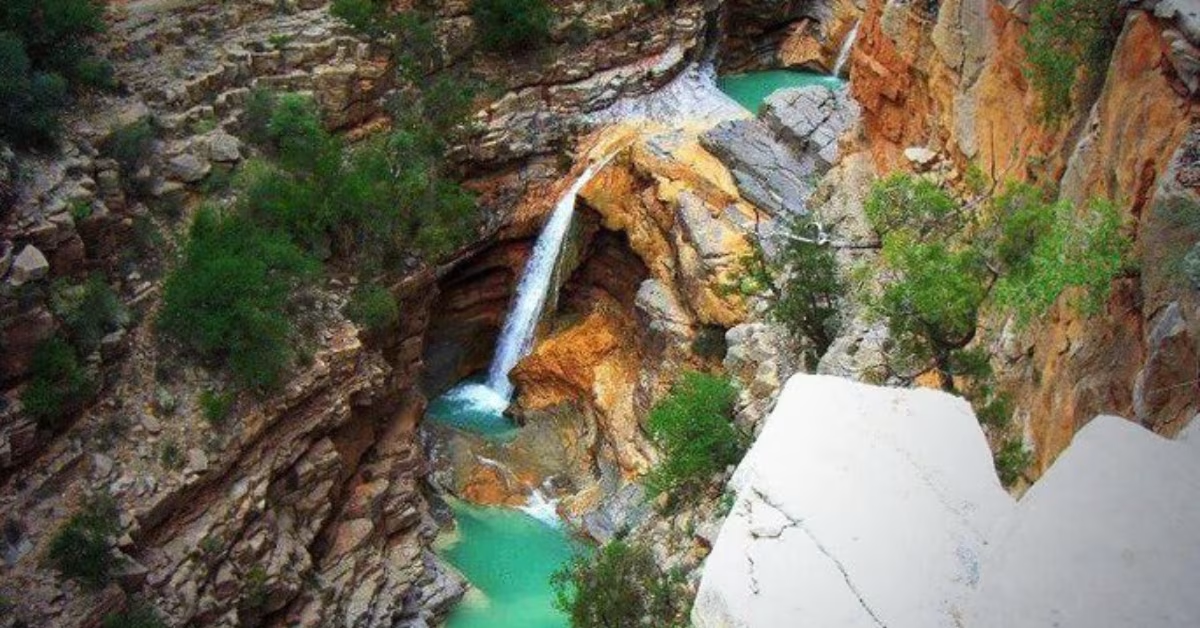
This is the main draw. The waterfalls tumble down from the heights of the Anti-Atlas into natural pools surrounded by dense vegetation, fig trees, and palms. The scene is beautiful, cool, and genuinely surprising for anyone arriving from the dry beaches of Agadir.
The best time to see them is spring, from March to May, when snowmelt and winter rains feed the springs. In summer, the flow drops off considerably, sometimes almost vanishing altogether. If the waterfalls are your main reason for coming, aim for February to April and you will not be disappointed.
Access is on foot from the village, along a waymarked path that is manageable for everyone, including young children with a little care. Allow about thirty minutes each way. Closed shoes are recommended as the path can be slippery after rain.
Imouzzer honey: a reputation that travels
While the waterfalls draw the tourists, it is the honey that built the village's name. Imouzzer is celebrated across Morocco for the exceptional quality of its honey, produced from a remarkably rich wild flora: euphorbia, thyme, wild lavender, and argan. The local bees have plenty to work with, and what ends up in the jar is well worth the fuss.
Several varieties are available depending on the season: euphorbia honey, with its strong and slightly bitter character; thyme honey, softer and more aromatic; and mountain honeys with complex flavours that shift from one producer to the next. Take time to taste before you buy; local producers are happy to let you sample.
When it comes to purchasing, give the roadside tourist stalls a wide berth and seek out the small village producers, often recommended by wherever you are staying. Good Imouzzer honey is thick, fragrant, and crystallises quickly. If the jar looks too runny and the price seems too low, ask questions.
Every year, usually in July or August, Imouzzer hosts its honey festival, a local celebration that draws producers from across the region. Beekeeping demonstrations, tastings, crafts, Berber music: it is a lovely occasion to see the village at its liveliest, and to head home with a few carefully chosen jars.
Wandering the village
Imouzzer is not the sort of place you visit; it is the sort of place you wander. The pisé and ochre stone houses cling to the mountain terraces, the lanes are narrow and shaded, and the palmery stretching below the village makes for cool, unhurried walks. The pace is slow, the locals welcoming, and the children running between the gardens are very much part of the scenery.
On the food front, the village restaurants serve simple, generous Berber cooking. Lamb tagine with prunes, Friday couscous, briouates drizzled with honey: the flavours are honest, the portions decent, and the prices very reasonable. For families, it makes an ideal lunch stop before or after the waterfall walk.
What to do around Imouzzer
Imouzzer pairs naturally with other stops in the area. Agadir is an hour away and makes a comfortable base. Taroudant, sometimes called the little Marrakech, is worth a full day and sits about two hours by road. The Souss Valley, with its argan trees and argan oil cooperatives, can be explored easily on the way.
For walkers, the Anti-Atlas trails around Imouzzer offer half-day routes through quiet mountain scenery, with open views across the surrounding valleys. The level is moderate and accessible to families with children over eight.
Practical information
Best time to visit: spring, from February to May, for the waterfalls at full flow and comfortable temperatures. Summer is possible but the falls are less impressive and the heat more present.
Where to stay: a handful of guesthouses and small hotels offer simple, authentic accommodation in the village. Availability is limited, so book ahead in high season. Many visitors do the round trip from Agadir in a day, which is entirely doable.
Budget: the village itself is free to visit. Expect to spend a few dozen dirhams on lunch, and set aside whatever feels right for honey. Prices are very reasonable compared to the coastal tourist areas.
What to bring: closed shoes for the waterfalls, sunscreen, plenty of water, and a bag large enough to carry honey home.
Imouzzer is the kind of village that looks like nothing on a map and stays with you long after you have left. The waterfalls, the honey, the palmery, the panoramic road: every part of the visit adds up to something warm and unhurried, well clear of the standard tourist circuit. If you are passing through Agadir, do not leave without making the detour. You will be glad you did.