
Explore the Congress Palace in Ouarzazate
Ouarzazate tends to get written off as a stopover. A place you pass through on the way to the desert, somewhere between Marrakech and the dunes further south. That's a shame, because this city genuinely rewards those who take the time to slow down and look around.
There's real character here. A quality of light that photographers chase from all over the world, kasbahs that have been standing for centuries, and an end-of-the-road atmosphere that belongs entirely to this place. They call it the Hollywood of Morocco, a reputation built on decades of major international film productions, and you can feel it in the architecture, in the pace of the streets, in the way the whole city carries itself.
The Palais des Congrès is a good example of what makes Ouarzazate interesting. It won't be topping any bucket lists, but it represents something worth paying attention to: the quiet ambition of a desert city that has chosen to engage with the modern world without losing sight of where it comes from.
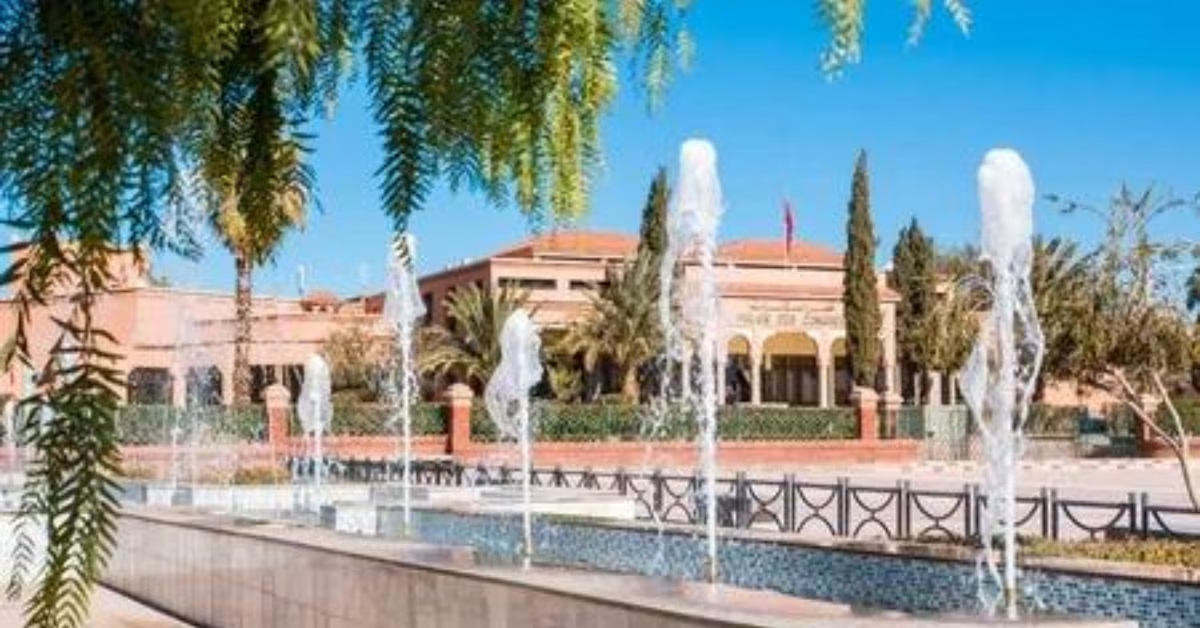
What Is the Palais des Congrès and Where Is It?
The Palais des Congrès is a large public venue built to host conferences, seminars, international forums and official events of all kinds, part of a broader effort by Morocco to develop cultural and economic infrastructure beyond its major cities and give places like Ouarzazate a genuine presence on the national and international stage.
Architecturally, the building draws on the tradition of Moroccan public construction, with visible Berber and Saharan influences, clean lines, locally sourced materials, and that characteristic ochre tone that ties it visually to the surrounding kasbahs and landscapes. It doesn't try to impress. It tries to belong. And on that front, it does a pretty solid job.
The location is central. The Palais des Congrès sits right in the heart of Ouarzazate, close to the city's main arteries, making it both a useful landmark for getting your bearings and a convenient starting point for exploring everything else the city has to offer.
What to See and Do
To be upfront about it: this is not the kind of place you visit the way you'd visit a museum or a kasbah. The interior is largely reserved for events and official functions, and public access is not a given on any given day.
But the appeal of the place lies somewhere else entirely.
The exterior architecture: The facade is genuinely worth a look, with its geometric patterns drawn from Berber artistic tradition, its restrained proportions, and the way it sits comfortably within the urban fabric of Ouarzazate. For anyone who travels with a camera, it makes for a compelling subject, especially in the late afternoon when the warm southern light catches the ochre walls at just the right angle.
The neighbourhood atmosphere: The streets surrounding the Palais des Congrès give you Ouarzazate at its most everyday: wide palm-lined avenues, busy cafe terraces, local shops going about their business. Walking around this part of the city means seeing a side of things that most tourists never get to, well away from the polished visitor trail.
Events and programming: The Palais regularly hosts festivals, economic forums, environmental conferences focused on sustainable development in desert regions, and occasional cultural events open to the general public. If your visit happens to coincide with one of these, it's a genuinely interesting way to connect with local life on its own terms.
For families: The surrounding area is easy and pleasant to explore on foot. The spaces are open, the pace is relaxed, and there's no entrance fee, no queuing, no pressure of any kind. Just a straightforward, enjoyable walk through a city that knows how to welcome its visitors.
What's Nearby?
Ouarzazate punches well above its weight when it comes to things to see and do. Here are six highlights within easy reach of the Palais des Congrès.
The Kasbah of Taourirt: The crown jewel of Ouarzazate, and one of the finest kasbahs in the entire country. This former residence of the Glaoui, the great lords of southern Morocco, impresses at every turn, with its pisé towers, labyrinthine interior alleys, and a well-curated museum on site. It's within walking distance of the city centre, and it is absolutely not to be missed.
Atlas Corporation Studios: A significant part of Ouarzazate's international reputation rests on its film industry. Lawrence of Arabia, Gladiator, Game of Thrones: the list of major productions shot here is long and genuinely impressive. The studios offer guided tours, and kids in particular love spotting sets they recognise from films and television.
Aït Ben Haddou: About 30 kilometres outside the city, this UNESCO World Heritage ksar is one of the most photographed sites in Morocco, and with good reason. Its ochre earth towers, stacked up a hillside above a dry riverbed, have a quality that photographs struggle to fully capture. Allow at least half a day, ideally more.
Lake Al Mansour Eddahbi: Right on the edge of the city, this reservoir offers a genuinely surprising landscape: a stretch of turquoise water framed by bare, arid mountains. The contrast with the surrounding desert is striking, and it makes for a great family stop and a memorable set of photos.
The Cinema Museum: Smaller and more low-key than the studios, this compact museum traces the city's remarkable filmmaking history through photographs, posters and production props. It's a short visit, but an informative one, and it goes a long way toward explaining why so many of the world's leading directors have made the journey to Ouarzazate.
The Drâa Valley: Head south from the city and the Drâa Valley unfolds across kilometre after kilometre of some of the most spectacular scenery Morocco has to offer: enormous palm groves, pisé villages, fortified ksour, and oases that appear out of nowhere in the middle of an otherwise relentless landscape. It's the kind of drive that stays with you long after you've got home.
Practical Information
Getting to the Palais des Congrès: The building is centrally located and easily walkable from most hotels in the city centre. By taxi from the bus station or the film studios, you're looking at under 10 minutes and a very reasonable fare.
When to visit Ouarzazate: The sweet spot is March to May or September to November. Temperatures are comfortable, the light is exceptional, and the city hasn't yet been hit by the full force of summer heat, which can push past 40 degrees in July and August. Winter is mild and sunny, though nights can get cold.
How long to allow. A full day covers the main sites in Ouarzazate itself. Two days gives you the space to visit Aït Ben Haddou and explore the Drâa Valley without feeling rushed.
Tips before you go:
Dress in light layers during the day and keep something warmer to hand for the evening, even in summer.
Drink more water than you think you need: the dry desert heat dehydrates you faster than you'd expect.
Pack sunscreen and a hat. The sun here is serious business.
For families, the film studios and Aït Ben Haddou are both particularly well suited to children.
Most sites and local businesses operate on a cash basis, so make sure you have dirhams on you before heading out.
The Palais des Congrès of Ouarzazate is unlikely to be the reason you make the trip. But it's part of the fabric of a city that has managed something genuinely impressive: building a modern identity in the middle of the desert while staying rooted in its own history and landscape.
Ouarzazate deserves more than a single night. It's a complete destination in its own right, with its own rhythm, its own character, and a generosity of scenery that holds its own against anywhere else in Morocco. Take the time to stop. Wander the streets. Let the southern light do what it does best.