Explore Tafilalet, Morocco’s Historic Oasis
Some places simply don't look like anywhere else you've ever been. Tafilalet is one of them.
No maze-like medina, no souk overrun with day-trippers, no postcard clichés. This is something else entirely. This is the real Morocco, the one that has existed for centuries before the first travel guide ever went to print. The Morocco of salt and gold caravans, of freezing nights under a sky riddled with stars, of dunes that shift shape with the wind as if they were breathing.
Tafilalet is the edge of the world, made accessible. A few hours' drive from the major cities, this south-eastern region of Morocco disorients you completely from the very first kilometres of ochre track. In this guide, we take you through everything worth knowing before you go: what to see, how to get there, when to visit, where to sleep, what to eat, and all the practical details you need.
Where Is Tafilalet? Understanding the Region
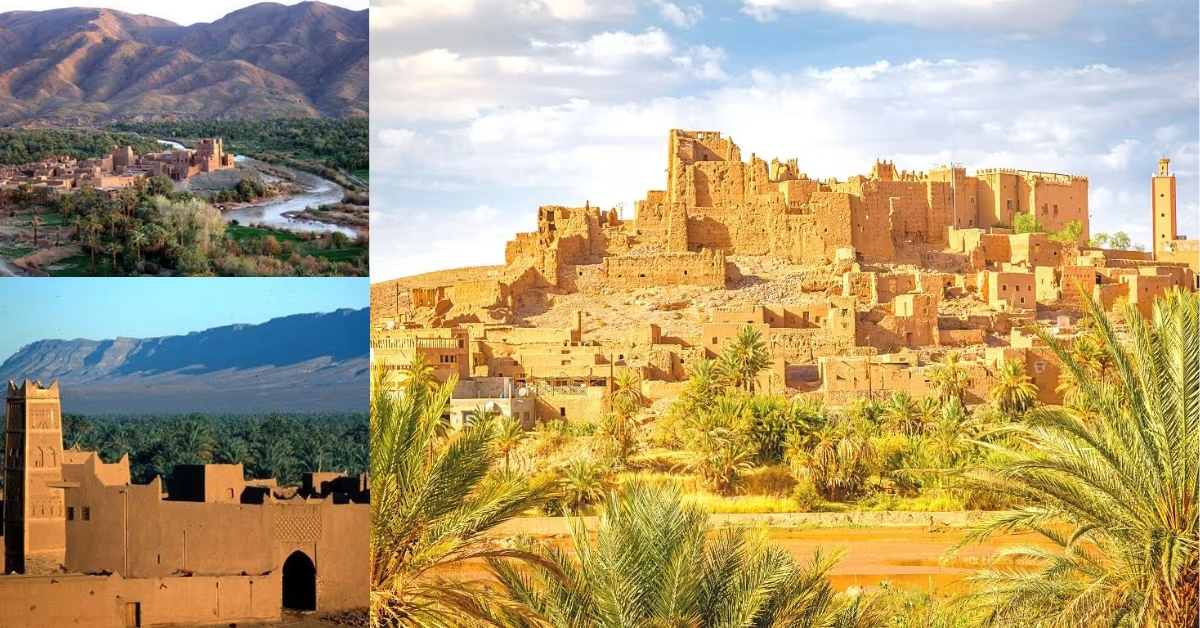
Tafilalet sits in south-eastern Morocco, at the foot of the Saharan slopes of the High Atlas. It is a vast region stretching along the Ziz Valley, between the last mountain ridges and the first dune fields of the Sahara.
Three names to keep in mind: Erfoud, Rissani and Merzouga. Erfoud is the main town, practical for restocking and sleeping. Rissani is the historical heart of the region, with its legendary weekly market. Merzouga is the gateway to the dunes, a village perched at the edge of Erg Chebbi, where the desert truly begins.
Distance-wise, count on roughly 9 to 10 hours from Marrakech, or 7 to 8 hours from Fes, with Ouarzazate and Errachidia as solid intermediate stops. It is not exactly a short hop, but the drive itself is very much part of the experience. Tafilalet is worth every mile.
History and Culture: Morocco's Most Ancient Region
Tafilalet is not just beautiful. It is old. Very old.
This is where the Alaoui dynasty has its roots, the very same royal family that still rules Morocco today under King Mohammed VI. When you wander through the alleys of Rissani, you are walking on the ancestral land of the Moroccan royal family. That is no small thing.
Before that, Tafilalet was home to Sijilmassa, one of the most powerful cities in North Africa between the 8th and 14th centuries. Sijilmassa was an indispensable trading crossroads on the trans-Saharan routes, a city through which gold, salt, enslaved people, spices and manuscripts from sub-Saharan Africa all passed. Little remains today beyond a few discreet ruins on the outskirts of Rissani, but the aura of this former capital city is still tangible.
Culturally, the region reflects a blend of Berber and Arab identities, with a strong Sahrawi community presence and a nomadic tradition that still endures in some families. The people of Tafilalet are warm, curious about outsiders, and proud of their history. Take time to talk with them. It is often the finest discovery of the trip.
What to See and Do: The Essentials
The Erg Chebbi Dunes
Erg Chebbi is what everyone comes to Tafilalet for, and rightly so. Dunes reaching up to 150 metres high, burnt orange in the morning, golden in the afternoon, almost violet at sunset. It is genuinely spectacular. Children love charging up and tumbling back down the sand slopes; adults tend to seek out the silence at the summit. Everyone finds what they are looking for.
Rissani and Its Market
The Rissani souk is one of the most authentic markets in Morocco. You will find dates in industrial quantities, spices, pottery, textiles, live animals, and an atmosphere that has very little in common with the tourist-facing souks of Marrakech. It is loud, colourful, fragrant and alive. Go on a market day, ideally Sunday, Tuesday or Thursday.
The Tafilalet Palm Groves and Dates
Tafilalet is Morocco's largest palm grove, with hundreds of thousands of date palms stretching along the Ziz Valley. A walk or cycle through the groves is a genuinely peaceful experience, particularly for families. Come in autumn for date season, when local varieties including Medjool are at their finest and rank among the best in the world.
A Night in the Desert
Spending a night in the desert is non-negotiable. The night sky above Tafilalet is extraordinarily clear, far from any light pollution. Waking up at five in the morning to watch the sun rise over the dunes, with absolute silence as the only soundtrack, is one of those experiences that stays with you for a very long time.
The Ksar Villages
Ksour (the plural of ksar) are fortified pisé villages, built to withstand invasions and sandstorms. Tafilalet has many, some still inhabited, others in ruins but no less striking. The ksar of Oulad Abdelhalim, near Rissani, is among the most impressive and well worth the detour.
Erfoud and Its Fossils
Erfoud is known worldwide for its marine fossils, particularly trilobites and ammonites dating back hundreds of millions of years. The entire region rests on an ancient seabed, and the stone-cutting workshops in Erfoud offer fascinating visits, especially for children fascinated by palaeontology. Fossil shops are everywhere; expect to negotiate on price.
Experiences Not to Miss
A camel ride at sunset is undeniably a classic, but it is a classic for good reason. Allow one to two hours for a short ride, or a full night for those wanting total immersion. Quad bikes and buggies in the dunes are popular with teens and adults looking for a bit of adrenaline, with several local operators based in Merzouga. Rounding off a desert day with a traditional hammam is one of life's simple pleasures, and highly recommended.
Practical Information: Everything Before You Go
When to Visit : The ideal window runs from October to April: mild temperatures, operators at full capacity, and optimal conditions for making the most of the desert. Summer, with temperatures that can hit 50 degrees Celsius, is not recommended for a first visit. In winter, snow on the Erg Chebbi dunes is a rare and spectacular sight, but the glacial nights require proper gear.
Getting There : From Marrakech, allow 9 to 10 hours via the Route of a Thousand Kasbahs, with Ouarzazate as a natural midway stop. From Fes, 7 to 8 hours via Midelt and Errachidia, which is just 90 minutes from Erfoud. Errachidia airport is the nearest option if you are flying, though direct connections from Europe are limited. Hire a car for flexibility, take a CTM bus on a budget, or book an organised tour if you'd rather hand the logistics to someone else.
Where to Stay : There is something for every budget. In Merzouga, desert camps range from basic bivouacs for a few hundred dirhams up to luxury setups with pools and gourmet dinners. In Erfoud, comfortable riads and hotels make a good base. In Rissani, rustic guesthouses offer the most affordable options.
What to Eat : Wood-fired tagine, harira soup in the evenings, and above all, Medjool dates from Tafilalet: plump, soft, and among the finest you will ever taste. Bring some home. People will be pleased.
Money and Budget : The local currency is the Moroccan dirham. ATMs are available in Erfoud, but carry cash before heading towards Merzouga or Rissani. Card payments are virtually non-existent outside the larger hotels.
Dress and Local Customs : Tafilalet is a conservative region. Shoulders and knees covered in villages and souks, for everyone. A small and easy gesture of respect.
Health and Safety : Drink at least two litres of water per day and use SPF 50 sunscreen. Pharmacies in Erfoud handle most everyday needs. Be cautious of unofficial guides approaching you on arrival, and always agree on a price before accepting an excursion or buying a souvenir.
Around Tafilalet: Extending the Trip
Tafilalet is a natural springboard for a region rich in landscapes and historical sites. If you have a few extra days, here is what is genuinely worth the journey.
The Todra Gorges, roughly two hours from Erfoud near Tinghir, are among the most dramatic natural sites in Morocco. Limestone cliffs rising 300 metres, a river running along the canyon floor, a cool and mineral atmosphere. Accessible with children. Not optional.
The Dades Gorges, along the road between Ouarzazate and Erfoud, offer otherworldly landscapes with their twisted rock formations, known locally as the "monkey fingers." A real treat for photographers.
Ouarzazate deserves a stop, particularly if you are arriving from Marrakech. Morocco's so-called Hollywood houses major film studios and, just twenty minutes away, the ksar of Ait Ben Haddou, a UNESCO World Heritage Site and one of the finest examples of pisé architecture in the country.
Zagora is another desert gateway, more remote and far less crowded than Merzouga. Ideal if you are after authenticity without the crowds.
Midelt, on the road down from Fes, is a pleasant mountain-town stopover before the descent into the desert. Often overlooked, rarely regretted.
Tafilalet is not really something you can describe adequately. The silence of the desert at night, the warmth of the people, the dunes at dawn: some trips shift the way you see everything that comes after them. This is one of those trips.
Just go.
Register
By entering your email address, you agree to receive our newsletters by email and you are aware of our Privacy Policy.