Discover the Historic Port of Essaouira
Essaouira hits differently from the moment you arrive. The light is sharp and Atlantic, gulls cut across the sky with purpose, the smell of grilled fish drifts through the air on a wind that means business, and ochre ramparts rise along the waterfront as if they have been holding the ocean at bay for centuries. Which, in a sense, they have. The historic port is where all of this begins. It built the city, shaped its character, and gave it a reason to exist. Any visit worth its salt starts here.
So, What Exactly Is Essaouira?
Essaouira sits on Morocco's Atlantic coast, roughly 170 kilometres north of Agadir and 200 kilometres west of Marrakech. It is a small city, unhurried and wide open to the sea, one that never tried to compete with the kingdom's bigger tourist destinations and has been all the better for it.
Its nickname, "the city of trade winds", tells you most of what you need to know. The wind blows here almost year-round, sometimes as a gentle breeze, sometimes with a forcefulness that catches first-time visitors off guard. Those same winds have earned Essaouira a global reputation among kitesurfers and windsurfers, and they give the city a restless, invigorating energy that you simply will not find anywhere else along the Moroccan coastline.
What sets Essaouira apart from the country's other medinas is the quiet it carries. The alleyways are wide, airy, and painted in blue and white. You wander freely, without pressure, without anyone steering you somewhere you did not ask to go. In 2001, UNESCO added the medina to its World Heritage List, acknowledging an urban ensemble that has somehow held onto its soul through centuries of change.
A Bit of History: How Did This Port Come to Be?
The story of Essaouira's port stretches back more than two thousand years. The Phoenicians, and later the Berbers, were already working this coastline long before the common era, drawn by the natural shelter the bay provides against the Atlantic's strongest currents.
The Portuguese arrived in the 16th century and built the first fortifications. They named the place Mogador, a name whose exact origins are still debated but one that stuck around for a very long time, and that older residents still use today.
The real turning point came in the 18th century, when Sultan Sidi Mohammed Ben Abdallah set out to rebuild the city from scratch with a clear strategic goal: to make Essaouira the kingdom's primary Atlantic trading port, connected to European maritime routes. He brought in a French architect, Théodore Cornut, who designed the geometric precision of the ramparts and the orderly grid of streets that remains striking to this day, and that feels quite unlike any other medina in Morocco.
The port flourished. Spices, gold, ivory, sugar, and leather all passed through Essaouira on their way to Europe. That prosperity is still visible in the quality of the ramparts, in the old merchants' houses lining certain streets of the medina, and in fortifications that have come through the centuries largely intact.
The Port Today: Real Life, Unfiltered
Essaouira's port was not designed with tourism in mind. It is a working artisanal fishing port, and it comes with everything that entails: noise, smells, activity, and a rawness that no amount of staging could ever replicate.
Morning is the best time to be here. Boats come in with their catch, fishermen unload crates of sardines, sea bream, and squid, and the fish auction gets underway in an atmosphere that is fast, focused, and entirely its own. The gulls, consummate opportunists, wheel overhead in tight circles with a kind of professional dedication that is hard not to admire.
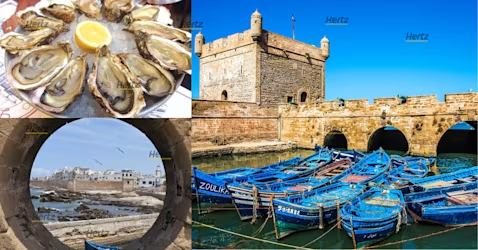
The fishing boats are painted blue, almost without exception, and that colour has become Essaouira's most iconic image. Moored side by side in the harbour, they make a picture that photographers, amateur and professional alike, never seem to tire of composing in every available light.
This is a place where there is nothing in particular you need to do, and that is exactly the point. You watch, you wander, you let the salt air do its thing. For families with young children, the combination of gulls, boats, and the constant movement of fishermen going about their work provides free, effortless entertainment that holds attention surprisingly well.
The Skala du Port and the Ramparts
A lot of visitors confuse Essaouira's two Skala and leave having properly seen neither. It is worth being clear about which is which.
The Skala du Port sits at the southern end of the fishing port. It is a fortified tower of Portuguese origin, reinforced during the reign of Sultan Sidi Mohammed Ben Abdallah. Entry costs a modest fee, and the view from the top, over the port, the boats, and the open Atlantic, ranks among the finest vantage points in the city.
The Skala de la Kasbah is a different structure entirely, located at the northern edge of the medina. It is a long bastioned platform running along the northern ramparts, lined with dozens of bronze cannons of Spanish and Dutch origin. The ocean view from this terrace is something else, particularly in the late afternoon when the Atlantic light turns golden and does remarkable things to the ochre stone.
Both are worth your time. Wear suitable shoes, as the surfaces are uneven in places, and if you have young children with you, keep a close eye near the exposed edges.
What to Do at and Around the Port
The first order of business is straightforward: eat. Right across from the port, a row of small grilled fish restaurants welcomes visitors with the kind of directness that leaves no room for indecision. The setup is simple: you pick your fish from the display, it gets weighed, grilled in front of you, and served with bread, olives, and salad while you sit facing the sea. It is lively, generous, and represents some of the best value for money you will find anywhere in Morocco.
From the port, the beach stretches southward for several kilometres. It is a long sweep of wind-swept sand where the colourful kites of windsurfers and kitesurfers fill the sky at almost any hour of the day. This is not a beach for lounging. It is a beach for walking into the wind, breathing in the wide open air, or signing up for a lesson at one of the many water sports schools set up along the shore.
The medina, a few minutes on foot from the port, is well worth a proper explore. Thuya woodwork workshops, an artisanal speciality unique to Essaouira, fill the alleyways with a warm, distinctive scent. Art galleries are more plentiful here than in any other Moroccan city, a reflection of the creative pull this place has always had on artists. The spice souk and the Joutia, Essaouira's flea market, round out an exploration that can easily fill another half day.
Practical Info and Tips for Your Visit
Getting to the port. From Place Moulay Hassan, the lively main square at the heart of Essaouira, the fishing port is just a five-minute walk. Follow the ramparts south and the signage will take care of the rest.
Best time to visit: Spring (April to June) and autumn (September to October) are the sweet spots. The weather is pleasant, the light is beautiful, and the crowds are manageable. Summer brings higher prices, busier accommodation, and a lot more people. Winter is quieter and more intimate, but the wind picks up and the morning mist can make for grey starts to the day.
The wind : It is not a rumour or an occasional inconvenience. It blows every day, often strongly, and that includes the height of summer. Pack a light jacket regardless of the season, and leave the wide-brimmed hat at the hotel.
Unsolicited guides: The pressure is considerably lighter here than in Marrakech or Fez, but it exists. A polite, firm decline is all it takes in most cases. For a quality guide, go through your accommodation rather than accepting offers at the medina entrance.
The two Skala: The Skala du Port is in the south, right by the fishing port. The Skala de la Kasbah is in the north, along the medina's ramparts. They are not the same place, and both are worth seeing.
The Jimi Hendrix legend: Someone will tell you he wrote his greatest songs here. It is a good story, and like most good stories, it has been improved with retelling. Hendrix did visit the area in 1969, but the connection between that trip and his music belongs more to local lore than to documented history.
Essaouira has a habit of becoming the highlight of a Moroccan trip, often for people who barely planned to stop there at all. Those who arrive with low expectations tend to be the ones who leave wishing they had booked an extra night. The historic port is the natural place to begin: busy and full of life in the morning, calm and golden by late afternoon, it sets the tone for everything the city has to offer. Unforced authenticity, understated beauty, and that persistent wind, which, once you are back home, you will find yourself missing more than you expected.