Discover Bab Nkob Gate
A Gate, and a Whole World Behind it
In Marrakech, gates are not simply doorways. They are open books on the city's history, landmarks in the maze of the medina, silent guardians that have watched centuries pass without flinching. Bab Nkob is one of those.
Walk past it without knowing what it represents, and you might miss something genuinely worth stopping for. So before you reach for your camera, take a couple of minutes to understand what you're looking at.
History and Origins
The word "bab" simply means "gate" in Arabic. Marrakech's medina has several of them, and each once served a specific purpose: controlling access, protecting the city, regulating trade, or marking the entrance to a particular neighbourhood.
Bab Nkob is part of that long tradition. Built at a time when city walls were not a question of aesthetics but of survival, it served as a strategic passage point within the urban layout of Marrakech's medina. Its name, deeply rooted in local collective memory, speaks to an attachment to this place that goes far beyond architectural interest.
Marrakech's history is one of successive dynasties, each leaving its mark on the stone. Bab Nkob is no exception.
Architecture and Character
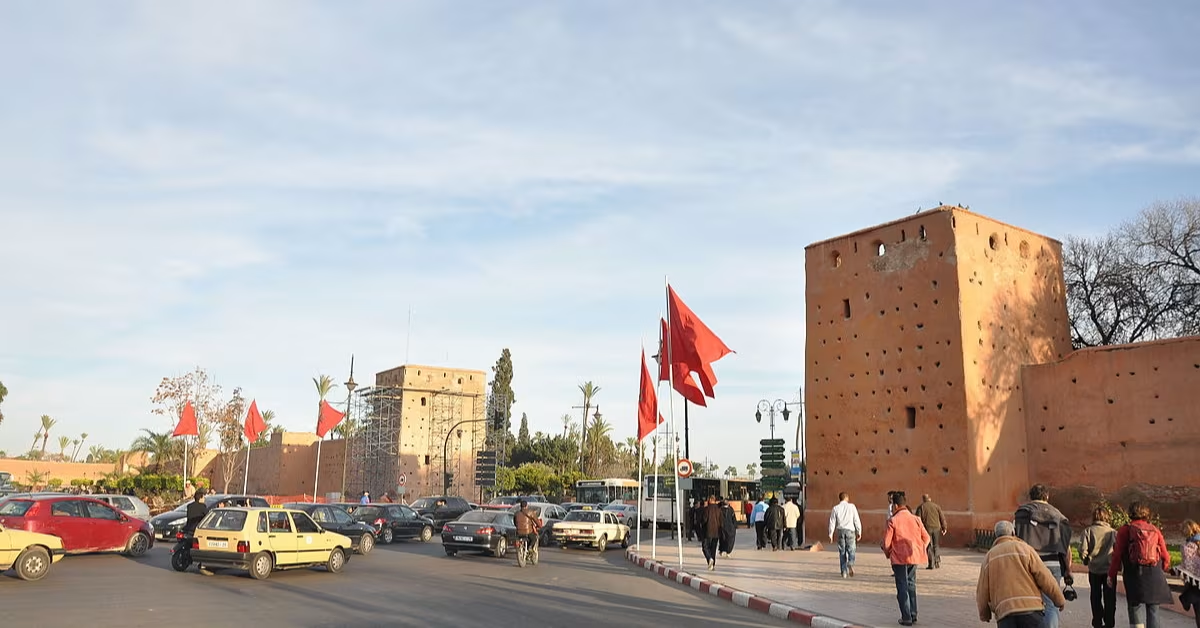
The first thing you notice is the sheer solidity of the structure. It commands its space without trying too hard to impress, and that is precisely what makes it worth your attention.
The materials, ochre stone, brick, carved detailing, are characteristic of traditional Moroccan craftsmanship. There is the same restrained but carefully worked aesthetic you find in Marrakech's great medieval constructions: subtle geometric patterns and an archway that frames the passage with quiet elegance.
It does not have the showstopping grandeur of Bab Mansour in Meknes, widely regarded as one of the finest gates in the Arab world. But it has a raw authenticity, a neighbourhood atmosphere that the more famous gates of Marrakech have largely lost to tourism.
Bab Nkob Today
The gate is alive. That matters, because plenty of monuments eventually start to feel like stage sets, preserved behind glass for visitors. Not here.
Around Bab Nkob, the medina breathes at its own pace. Locals pass through, children play, traders get on with their day. In the morning especially, the energy is real and unhurried in the best possible way. This is the kind of spot that reminds you Marrakech is not just Jemaa el-Fna.
The gate itself is well preserved, and its integration into the surrounding neighbourhood gives it a charm that over-restored sites have long since surrendered.
Practical Information and What to Do Nearby
Getting there: Bab Nkob is easily walkable from the heart of the medina. No car needed, no guide required. A good pair of comfortable shoes will do the job, because Marrakech's alleyways are not kind to heels.
Best time to visit: Early morning or late afternoon, when the ochre light is soft and the heat is manageable. In the height of summer, midday is a different story altogether.
With kids: The neighbourhood is accessible and perfectly safe. Children generally love the atmosphere around the medina, the colours, the sounds, the general buzz of it all. Bring water and snacks; kids do not forgive dehydration.
A few tips: As anywhere in the medina, dress respectfully, be polite with locals, and be cautious of the "spontaneous guides" who materialise out of nowhere offering their services for a fee.
5 Must-see Spots near Bab Nkob
Bab Nkob is well positioned: the surrounding medina is packed with places worth visiting, most of them reachable on foot within minutes.
Jemaa el-Fna Square: The beating heart of Marrakech. Come evening, the square transforms into one long, rolling spectacle, storytellers, musicians, fire-breathers and dozens of food stalls taking over the space. Unavoidable, a little chaotic, and completely one of a kind.
The medina souks: A short walk from Bab Nkob, the souks are organised by trade: tanners, saddlers, weavers, spice merchants. Getting lost is half the point. Allow plenty of time, patience, and enough energy left over to haggle.
Ben Youssef Medersa: A former Quranic school built in the 16th century, this is one of the finest examples of Islamic architecture in the entire city. The zellige tilework, stucco arabesques and carved cedar woodwork rarely leave visitors unmoved, even younger ones.
The Marrakech Museum: Housed in a magnificent 19th-century palace, it holds collections of Moroccan art and craftsmanship. The building itself is as impressive as anything inside it. A welcome cultural pause after the intensity of the souks.
The medina ramparts: Bab Nkob forms part of a circuit of walls that encircles the medina for nearly 20 kilometres. A walk along these ochre fortifications, ideally towards the end of the day, offers a perspective on Marrakech that most visitors never take the time to appreciate.
Bab Nkob may not appear on every "Top 10 Things to Do in Morocco" list. And honestly, that is a good thing. The places you stumble across without looking for them, around a corner, at the end of an unmarked lane, are often the ones that stay with you longest.
Take a moment to stop, look up, and let the stone tell its story. Morocco has a rare ability to share its history with those willing to slow down just enough to listen.
Register
By entering your email address, you agree to receive our newsletters by email and you are aware of our Privacy Policy.