Explore Archaeology at the Kasbah Museum in Tangier
Tangier is unlike anywhere else. Wedged between two seas and two continents, it has spent centuries being a crossroads, a place where civilisations have collided, overlapped, and left their mark. And up above it all, perched over the medina like a watchful guardian, sits the Kasbah. Inside its walls, the Kasbah Museum waits patiently for the curious travellers who've made the climb.
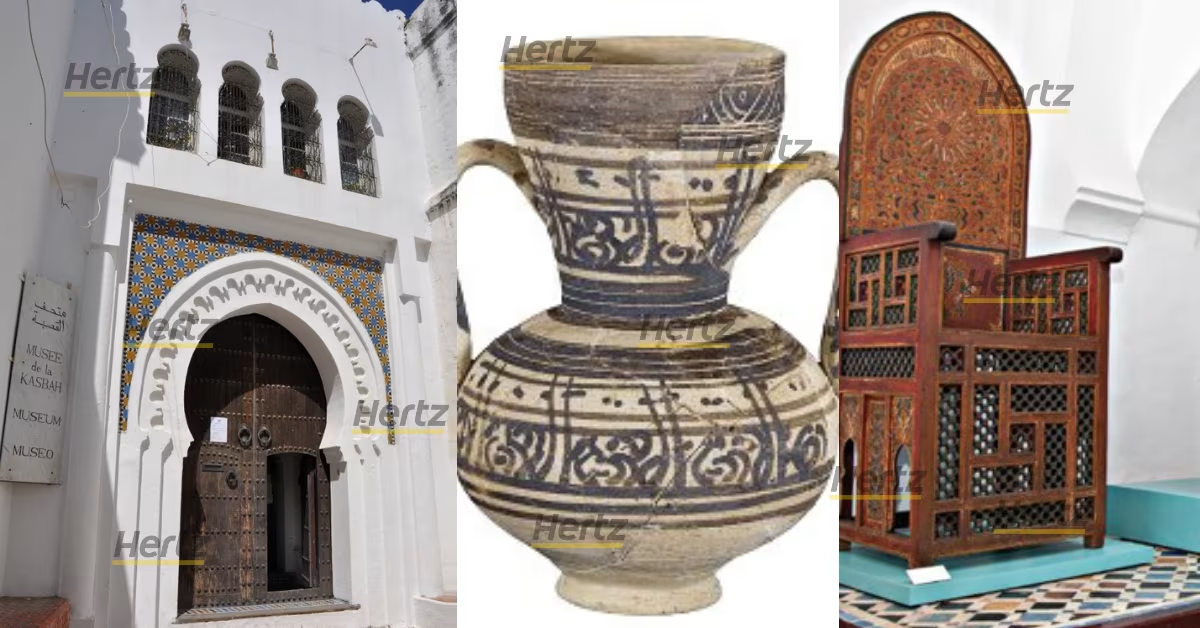
From Sultan's Palace to Museum: A Building with Stories to Tell
This place didn't start its life as a museum.
The building is the Dar el-Makhzen, the Sultan's Palace, constructed in the 17th century under the reign of Moulay Ismail. Back then, it was a seat of power, a place of ceremony and diplomacy, where Moroccan sultans received ambassadors from the great European powers. Tangier was already a coveted city, a strategic prize that everyone wanted a piece of.
Over the centuries, the palace served as residence to the city's governors, surviving wave after wave of foreign influence: Portuguese, English, Spanish, French. It absorbed all of it quietly. Then, in the 20th century, it was converted into a museum, which turns out to be excellent news for anyone visiting today. The setting is as remarkable as the collection it holds.
What You'll Find Inside
The moment you cross the threshold, it becomes clear that the building itself is an exhibit.
The inner courtyards are stunning, with detailed zellige tilework, hand-carved stucco, and painted cedar wood ceilings that make you stop mid-step to look up. There's always another detail you hadn't noticed. It's the kind of architecture that rewards attention.
The collections are split into two main sections.
The archaeological section brings together finds from excavations across the region, particularly from the Roman sites of Volubilis and Lixus. You'll find remarkable mosaics, bronze objects, ancient ceramics, and everyday items that make life two thousand years ago feel surprisingly tangible. If you have any interest in ancient history, this alone justifies the visit.
The ethnographic section takes a more intimate approach, telling Morocco's story through traditional costumes, Berber jewellery, musical instruments, historic weapons, and artisan objects from across the country's different regions. It's an excellent introduction to Moroccan culture, particularly if this is your first time in the country.
Kids, it turns out, are perfectly entertained. Colourful mosaics, old armour, objects pulled from the distant past: there's enough to spark genuine curiosity in younger visitors, and parents will appreciate being able to explore without a constant battle for attention.
Practical Information
Opening hours and prices: The museum is open every day except Tuesday, from 10am to 6pm. Entry is around 10 dirhams per person, making it one of the most affordable visits in the city and easily one of the most rewarding.
How long to allow: An hour to an hour and a half is enough to see everything at a comfortable pace. Keen history buffs or families with inquisitive children should factor in a little extra time.
Getting there: The museum sits inside the Kasbah, in the upper part of the medina. On foot from the city centre, allow around twenty minutes, heading up via Rue de la Kasbah. Fair warning: it's a climb, and in places it's a proper one. If you'd rather take a taxi, ask to be dropped at the Kasbah entrance and walk the last stretch through the lanes.
Best time to visit: Weekday mornings are ideal. Fewer visitors, softer light in the courtyards, and a calm that contrasts sharply with the bustle of the medina below. Weekends in high season bring a few more people, but nothing like the crowds you'd find at major tourist sites around Marrakech.
Do you need a guide? Not strictly, but it makes a real difference. The printed explanations inside can be sparse, and a knowledgeable guide adds the historical context that transforms objects into stories. Guides are available at the Kasbah entrance; just agree on a price before setting off.
What to Do Nearby
Once you've finished at the museum, resist the temptation to head straight back down. The Kasbah neighbourhood has plenty more to offer within a short walk.
The Kasbah Quarter: You're already in it, so use that to your advantage. Wander without a plan through the narrow whitewashed streets, past doors painted in shades of blue and green, and let the neighbourhood reveal itself slowly. It's quieter and more atmospheric than the medina below.
Place du Mechouar: Just outside the palace entrance, this broad paved square offers one of Tangier's finest viewpoints. On a clear day, you can see across the Strait of Gibraltar all the way to the Spanish coastline, and pick out the direction of Cap Spartel to the west, where the Atlantic meets the Mediterranean. Bring a camera.
Ibn Battuta Museum: A short walk into the medina, this small museum is dedicated to Tangier's most famous son, the 14th-century explorer Ibn Battuta, whose journeys across Africa, the Middle East and Asia rival anything in the history of travel. Worth a look even if you're short on time.
Grand Socco: Head downhill and you'll emerge onto this lively square, the meeting point between the old medina and the modern city. Cafés, small shops, street vendors, constant movement: Grand Socco captures something essential about everyday Tangier.
Petit Socco: A few streets further in, this small historic square was once a favourite haunt of diplomats, artists and foreign writers. Today it's a great place to sit with a coffee and watch the medina go about its day.
The Kasbah Museum is the kind of visit that looks modest on paper but stays with you long after. A sultan's palace repurposed into a cultural treasure, rich and varied collections, architecture that earns its own entry ticket, and a location that makes it a natural anchor for exploring Tangier's historic heart.
Whether you're a history enthusiast, a casual explorer, or travelling with children looking for something to hold their interest, you'll leave with a sense of Tangier that most visitors, those who rush through without looking up, never quite find.
Register
By entering your email address, you agree to receive our newsletters by email and you are aware of our Privacy Policy.