The Chrob ou Chouf Fountain in Meknes: Drink or Look
Some places in Morocco announce themselves immediately. The Chrob ou Chouf Fountain works differently. You walk past it, slow down, wonder what you're looking at, and then you stop. That's when it gets interesting.
Chrob ou Chouf. The phrase comes from Moroccan Arabic, and it translates roughly as "drink or look." Two invitations in one, offered to passersby for centuries. Drink the cool water that flows from the fountain, or simply pause to take in the beauty of the thing. Either way, the message is the same: stop rushing, take a moment.
Tucked into a narrow lane in the medina of Meknes, this fountain is the kind of understated monument that tells you more about a city than any grand landmark ever could.
History and Context: Water as More Than a Resource
In the traditional Islamic city, water was never just a practical necessity. It sat at the centre of spiritual, social, and urban life. Mosques, hammams, madrasas, and public fountains formed a hydraulic network that shaped the medina as much as its streets and souks did.
The public fountain, known in Arabic as a sabil, served a specific purpose. It gave residents without running water at home a place to collect it freely, and offered travelers a place to drink as they passed through the city. It was generosity cast in stone, a gift from a ruler or a wealthy patron to the community, an act of piety as much as an act of politics.
The Chrob ou Chouf Fountain was built in the 14th century under the Marinid dynasty, making it one of the oldest monuments in the medina of Meknes. It has outlasted earthquakes, renovations, and the slow erosion of time, and it's still there, in its alleyway, waiting for the visitors who know where to look.
What You'll Find
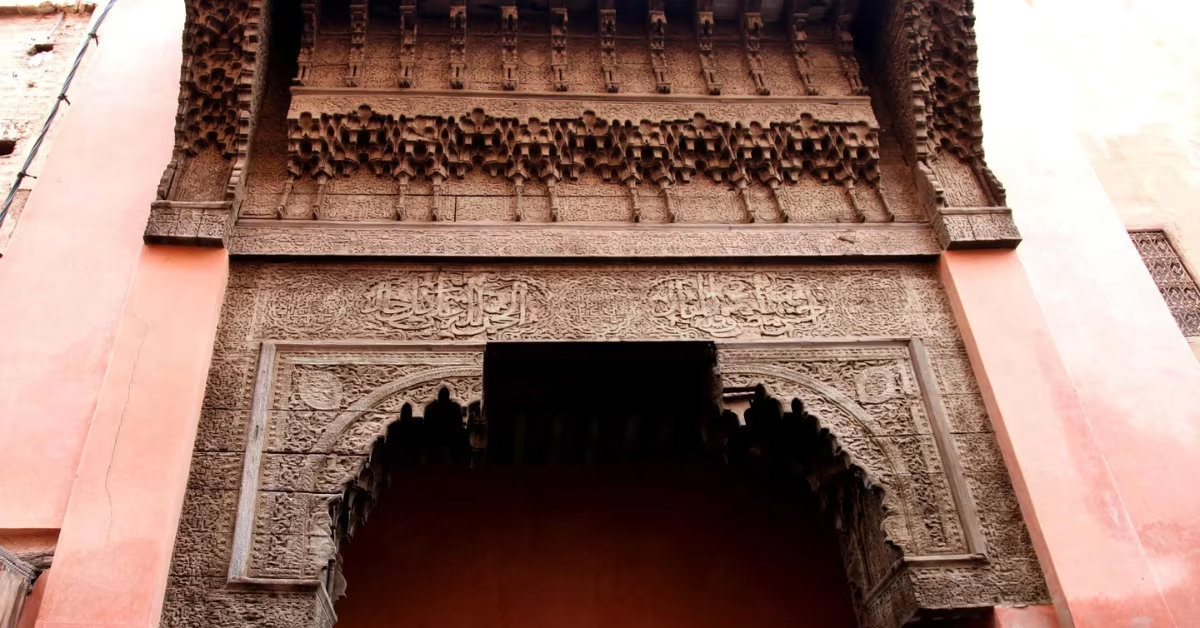
The first thing that hits you is the contrast. The lane is narrow, the surrounding walls are plain, and then this intricately carved facade appears out of nowhere, like an illuminated page in an otherwise unremarkable book.
The fountain's architecture is a concentrated display of everything medieval Morocco did best. The lower section is clad in zellige, the geometric mosaic tilework that Moroccan craftsmen have elevated into a genuine art form. Above it, hand-carved stucco unfurls into arabesques and geometric patterns of remarkable delicacy, the kind of work that makes you wonder how long it took and how steady a hand it required. At the very top, a cedar wood frieze completes the composition, carved with calligraphic inscriptions that speak to the fountain's original purpose.
The basin itself is simple. Understated, functional, cut from plain stone. It's precisely that plainness at the base that makes the decorative richness above it so striking.
Today, the fountain no longer flows consistently, or only symbolically depending on the time of year. But it remains a living point in the medina. Local residents walk past it every day, children play nearby, and the handful of tourists who make it this far inevitably stop to reach for their cameras. You can't help it.
Practical Information
Where to find it: The Chrob ou Chouf Fountain sits in the medina of Meknes, close to the Grand Mosque and the Bou Inania Madrasa. It's woven into the fabric of the old city, which means it's not on a main square but tucked into a side street, and finding it takes a little navigation. Bring a map or pull up Google Maps before you head in.
Getting there: From Place El Hedim, the lively central square of the Meknes medina, allow around ten minutes on foot, heading into the lanes. By taxi from the city centre or the train station, ask to be dropped at Place El Hedim and walk from there.
Entry and cost: The fountain is on a public street. No ticket, no opening hours, no queue. You walk up, you look, you linger as long as you want. It's free, and that feels entirely appropriate.
Best time to visit: Morning is ideal. The light is softer, the medina is quieter, and the fountain is easier to appreciate without the afternoon foot traffic. That said, the bustle of the medina later in the day has its own charm, just a different kind.
What to Do Nearby
The Chrob ou Chouf Fountain fits naturally into a broader visit to the Meknes medina, which is, alongside Fez, one of the most beautiful and least overrun in Morocco. Here are four places worth combining with your visit.
Bab Mansour: A few minutes' walk away, this monumental gate is the symbol of Meknes. Built in the early 18th century under Sultan Moulay Ismail, it is widely considered one of the finest gates in North Africa. The scale is impressive, the zellige and marble decoration is extraordinary, and the open square in front of it gives you the space to properly take it in.
The Mausoleum of Moulay Ismail: Just beyond Bab Mansour, this mausoleum holds the tomb of the sultan who transformed Meknes into an imperial capital in the 17th century. It is one of the very few religious sites in Morocco open to non-Muslims, which makes it a rare and quietly moving experience. The interior is serene, beautiful, and unlike anything most visitors expect.
Dar Jamai Museum: Housed in a 19th-century palace, this museum brings together a strong collection of Moroccan arts and crafts, including embroidery, ceramics, jewellery, and traditional furniture. A solid introduction to the region's cultural heritage, and visually rich enough to hold the attention of younger visitors too.
The covered market: A short walk from Place El Hedim, this market is the right place to watch daily life in Meknes unfold at its own pace, pick up a few local products, and experience a side of the city that has nothing to do with tourism.
The Chrob ou Chouf Fountain doesn't appear in every guidebook, and that might be exactly what gives it its worth. It doesn't try to impress from a distance. It requires a little effort, a willingness to leave the main routes, to accept getting slightly lost in the medina before you find it.
And when you do come across it, the name makes immediate sense. Drink or look. Two simple gestures, an invitation several centuries old, that capture something essential about what Morocco offers to the travelers who take the time to seek it out.
Register
By entering your email address, you agree to receive our newsletters by email and you are aware of our Privacy Policy.