Grape Festival in Bouznika
Morocco is so much more than the souks of Marrakech or the sand dunes of Merzouga. It is a country of popular festivals, village gatherings, and moments when an entire nation celebrates what the land gives it. The grape harvest festival in Bouznika, known as the moussem du raisin, is exactly that: an authentic celebration rooted in local tradition, and one that the vast majority of tourists have simply never heard of. Which is a real shame, because it is precisely the kind of experience you come home raving about.
Bouznika and the Moussem: Context and Origins
What is a moussem?
A moussem is a traditional Moroccan festival. The word refers to an annual gathering, often tied to a patron saint, a harvest, or a significant cultural event. Some have a strong religious dimension; others are primarily popular and celebratory in nature. The grape moussem in Bouznika falls firmly into the second category. Here, the celebration is all about the vine, the harvest, and the expertise of the region's farmers.
Bouznika: a town that deserves more attention
Bouznika sits on the Atlantic coast, roughly fifty kilometres south of Rabat and forty kilometres north of Casablanca. It is a quiet seaside town, far from the bustle of the major cities, with a long, clean beach that Moroccan families love visiting in the summer. Not yet overwhelmed by international tourism, it makes for a genuinely refreshing stop along the coastal road.
The vine in Bouznika: a long history
The Bouznika region enjoys a mild, Atlantic-influenced climate that is particularly well suited to grape growing. Vineyards have been part of the landscape here for decades, tended by local farmers who have passed their knowledge down through the generations. It is to honour this culture, this local pride, and this annual harvest that the moussem du raisin was born, gradually becoming an unmissable fixture in the regional calendar.
What You Experience on the Ground
An atmosphere you cannot manufacture
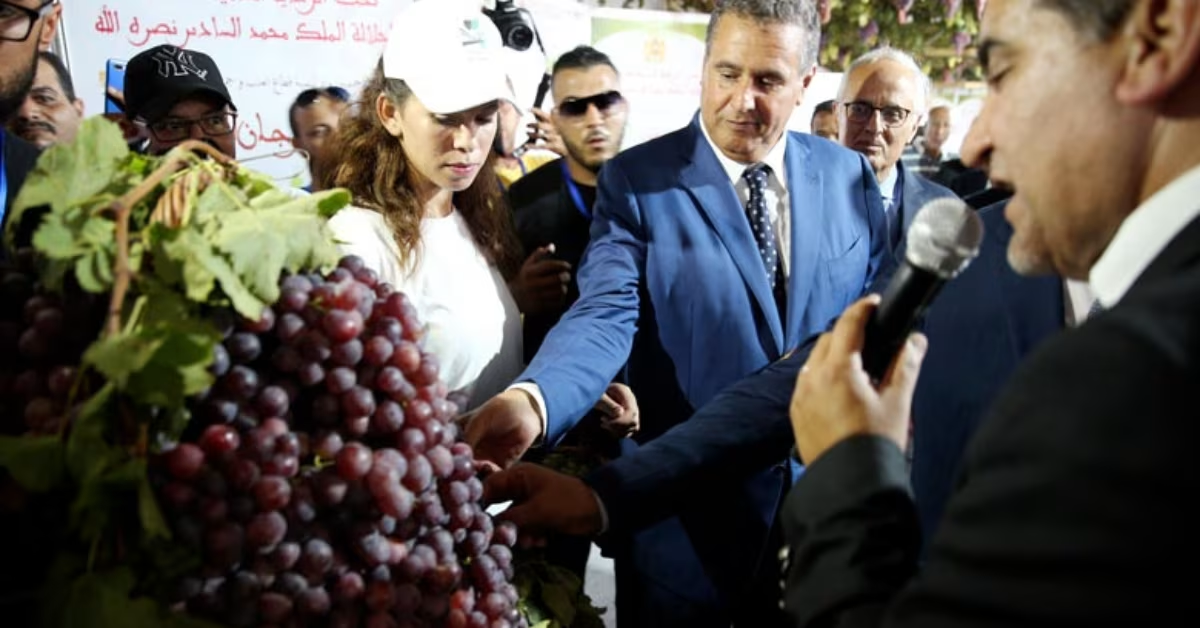
From the moment you arrive, the atmosphere wraps itself around you. Colours, sounds, the scent of ripe fruit and grilled food mingling with traditional music: the grape moussem creates an ambiance you will not find in any polished travel guide. Women in traditional dress, men proud of their harvest, children weaving between market stalls. It is Moroccan life at its most warm and unguarded.
Processions, music, and costumes
The festival is built around several highlights. Processions move through the town centre, with participants wearing traditional Berber and Arab dress, accompanied by musicians playing instruments such as the guembri and the bendir. The atmosphere is that of a village fete turned up several notches, and families with children particularly enjoy these vibrant, accessible, joyful moments.
Market stalls, grapes, and local produce
The moussem is also a market. Producers display their finest bunches, in shades ranging from translucent green to deep purple. Alongside the grapes, you will find stalls selling local crafts, spices, traditional pastries, and regional produce. It is the ideal place to bring something genuinely meaningful back home, rather than a camel-shaped keyring.
A festival for the locals, not for the tourists
And that is precisely what makes it so special. The moussem du raisin was not designed with visitors in mind. It has existed for a long time, it will continue long after your visit, and the locals celebrate it for themselves. As a visitor, you are welcomed warmly, but you remain a guest, and that position is infinitely more interesting than simply being a passive consumer of spectacle.
Practical Information
When to go: The grape moussem is typically held at the end of summer, between August and September, timed to coincide with the harvest. Exact dates vary from year to year, so it is worth checking with the local tourist office or keeping an eye on local announcements before finalising your plans.
Getting to Bouznika: From Casablanca or Rabat, Bouznika is very straightforward to reach. By car, allow around forty minutes from Casablanca and fifty minutes from Rabat via the A1 motorway. Trains on the Casablanca-Kenitra line also stop at Bouznika, making it an accessible destination even without a vehicle. For families, the car remains the most comfortable option.
How much time to allow: Half a day is enough to take in the festivities, browse the stalls, and watch the processions. Add a trip to the beach and a meal on site, and a full day comes together very naturally and very pleasantly.
Where to sleep and eat: Bouznika has a handful of hotels and seaside residences, but the accommodation offer is limited. During the moussem period, booking ahead is strongly advised, or you can base yourself in Casablanca or Rabat and make the trip as a day excursion. For food, grilled meats, fresh fish, and traditional Moroccan dishes are available both at the festival itself and in the small restaurants along the seafront.
What to See Nearby
Bouznika sits in one of Morocco's best-connected stretches of coastline. Within a few dozen kilometres, you have access to some genuinely remarkable sites.
Rabat: The kingdom's capital is less than an hour away. Rabat offers a UNESCO-listed medina, the majestic Hassan Tower and its esplanade, the Mausoleum of Mohammed V, and the atmosphere of a royal city that could not be more different from the energy of Marrakech. Well maintained, pleasant to explore on foot, and well suited to families.
Casablanca: In the other direction, Casablanca is a destination in its own right. The Hassan II Mosque, built partly over the ocean, is simply one of the most impressive religious buildings anywhere in the world. Beyond the mosque, the Corniche, the Art Deco architecture of the city centre, and the cosmopolitan energy of the city are well worth several hours of exploration.
Mohammedia: Tucked between Casablanca and Bouznika, Mohammedia is a coastal town that rarely appears on tourist itineraries. Yet its lively fishing port, quiet beaches, and seafood restaurants make it a very pleasant stop, especially for travellers looking to step away from the well-worn circuit.
The Exotic Gardens of Bouknadel: Located around twenty kilometres north of Rabat, the Exotic Gardens of Bouknadel are a genuine surprise. Created in the 1950s, they bring together plant species from around the world, arranged in themed spaces representing different regions of the globe. A transporting, shaded spot that children tend to love.
Skhirat beach: Between Rabat and Bouznika, Skhirat offers a long, largely undeveloped beach, popular with Moroccans and still untouched by mass tourism. It is a chance to share a beach day in a resolutely local atmosphere, with wandering vendors, families settled in for the day, and an invigorating Atlantic sea.
The grape moussem in Bouznika is not the kind of experience you will find in the glossy brochures of travel agencies. It is better than that. It is a living, sincere celebration, carried by people who are proud of their region and their culture, and open to anyone who arrives with curiosity and respect. If you are passing through Morocco between August and September, make the detour. You will leave with something that guided tours rarely give you: the feeling that, for one day at least, you lived at the pace of the country itself.