Pastilla: the Moroccan dish that breaks every rule and wins every time
A Dish that Defies every Category you Have
Some dishes are easy to explain. Pastilla is not one of them. Trying to describe it to someone who has never eaten it is genuinely tricky, because Moroccan pastilla belongs to that rare group of dishes that refuse to be neatly defined, that challenge everything you thought you knew about how food should work, and that tend to leave people quietly speechless for a moment after the first bite.
Sweet. Savoury. Crispy. Tender. All at once, all in the same mouthful.
If you are only going to try one dish in Morocco, there are people who will tell you, without hesitation, that this is the one.
History, Culture and Ingredients
Pastilla has a history that reads like a novel. Its roots lie in Andalusian cooking, brought to Morocco by the Moors expelled from Spain at the end of the 15th century, and it gradually embedded itself so deeply into Moroccan gastronomy that it became one of its most powerful symbols: a celebratory dish, a ceremonial dish, the thing you make when you genuinely want to impress.
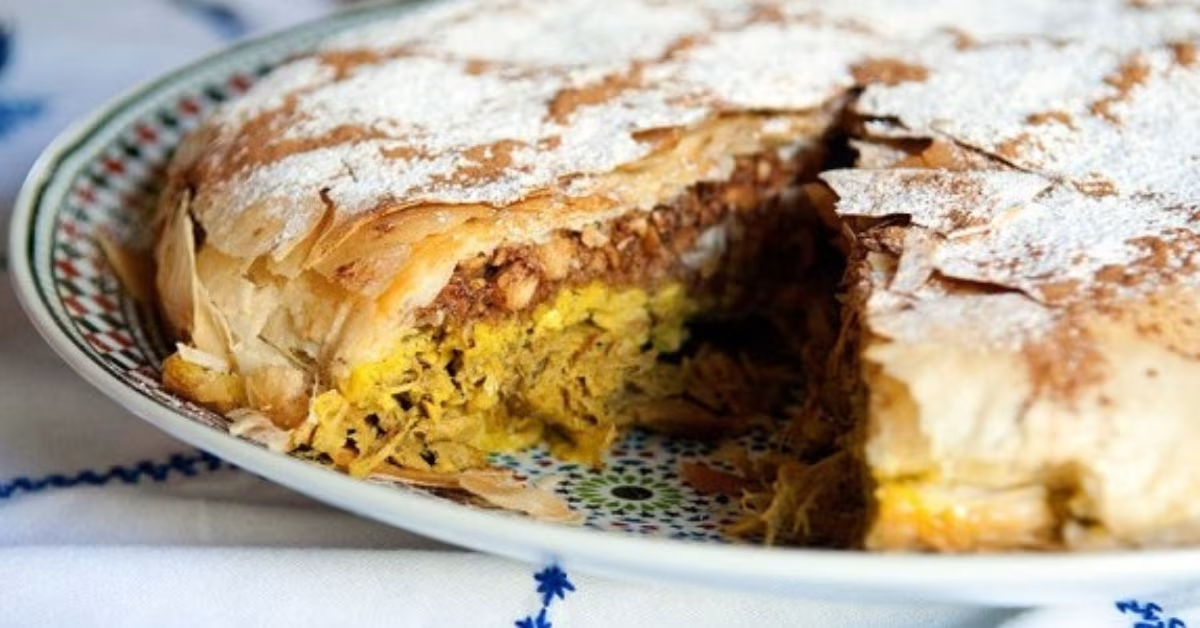
The traditional recipe is built around pigeon, spiced scrambled eggs, and cinnamon-sweetened toasted almonds, all wrapped in warqa pastry: a Moroccan filo so thin it is nearly translucent, almost fragile to the touch, that bakes into a crunch nothing else quite replicates. The top is dusted with icing sugar and cinnamon, giving pastilla its elegant appearance and that extraordinary sweet-savoury character that defines it.
Today, chicken versions have largely replaced pigeon in most restaurants, making the dish more accessible and less unfamiliar for international visitors. Seafood versions have also appeared in coastal cities, a modern development that divides traditionalists but tends to win over curious travellers.
The spices are everything. Ginger, cinnamon, saffron, and fresh coriander weave through the filling to create an aromatic depth that is reminiscent, in its richness and complexity, of the great recipes of northern Morocco. Fes in particular claims ownership of pastilla with a pride that nobody really challenges, and honestly, it is hard to argue with them.
How is it Made?
Pastilla is a dish that demands time and technique. This is not a weeknight recipe. It is a weekend project, a special occasion endeavour, and you can taste that effort in every single layer.
It starts with the warqa pastry, the most technically demanding part of the whole process. These ultra-thin sheets are made by dabbing a wet dough onto a hot plate to form near-transparent layers, a skill that takes years to master properly, and one that most home cooks quietly replace with shop-bought filo without losing too much sleep over it.
The filling is built in stages. The chicken or pigeon is slow-cooked in a spiced broth with onion, then shredded and combined with eggs scrambled in the reduced cooking juices. The almonds are fried separately, then roughly crushed and mixed with sugar and cinnamon to form a sweet, crunchy layer that plays against the softness of the meat in a way that makes complete sense the moment it hits your palate.
Assembly is careful, precise work. The warqa sheets are layered into a buttered dish in a rosette pattern, the filling goes in by turns, meat, then almonds, then meat again, and the whole thing is folded closed before going into the oven. When it comes out, a dusting of icing sugar and cinnamon settles over the golden surface like a light snowfall, quietly announcing that something exceptional is about to happen.
Where to Eat Pastilla
Pastilla is not a dish that gets improvised. In restaurants, it appears on the menus of traditional establishments that take their Moroccan cooking seriously, and the better places will often ask you to order it in advance, because this is not something that comes together in ten minutes.
Be cautious of very cheap versions rushed out in heavily touristy restaurants. A good pastilla takes real work, and its price reflects that honestly. Expect to pay between 80 and 150 dirhams per person, roughly eight to fifteen euros, at a quality traditional restaurant. That is more than a batbout, of course, but the two experiences are not remotely comparable.
Once the plate is cleared, order mint tea. It is the natural close to any Moroccan meal, and its fresh, sweet notes provide a perfect counterpoint to the richness of the pastilla, a gentle way of drawing things to a close.
For families, the chicken version is the most child-friendly. It is softer and less intense than the pigeon original, and the sweet-savoury combination tends to fascinate younger eaters who are not expecting to find cinnamon in a savoury dish. Watch their faces on that first bite. It is worth the trip on its own.
The best addresses are usually the ones locals point you toward: riads serving home-style cooking, family-run neighbourhood restaurants where pastilla is still made the way grandmother made it. These places are not always easy to track down, but they are absolutely worth the effort.
A Final Word
Moroccan pastilla is a dish that captures, in a single plate, everything that makes the cuisine of this country so remarkable. It is complex without being intimidating, generous without being excessive, and it leaves a lasting impression on everyone fortunate enough to eat a truly well-made version.
When you are in Morocco, take the time to find it, order it somewhere worthy of it, and eat it slowly. Some dishes deserve your full attention. Pastilla is one of them.
Register
By entering your email address, you agree to receive our newsletters by email and you are aware of our Privacy Policy.