Boules de neige marocaines : la douceur qui fond avant qu'on s'en rende compte
One bite and you are completely lost
Moroccan pastry is a world unto itself. It plays by different rules from anything you have tasted before, and it has this rare ability to catch even the most experienced palates completely off guard. Snow balls are the perfect example: small white spheres, light as air, that dissolve on your tongue before you have had a moment to process what just happened.
If you are travelling with children, go ahead and budget for multiple rounds.
History, culture and ingredients
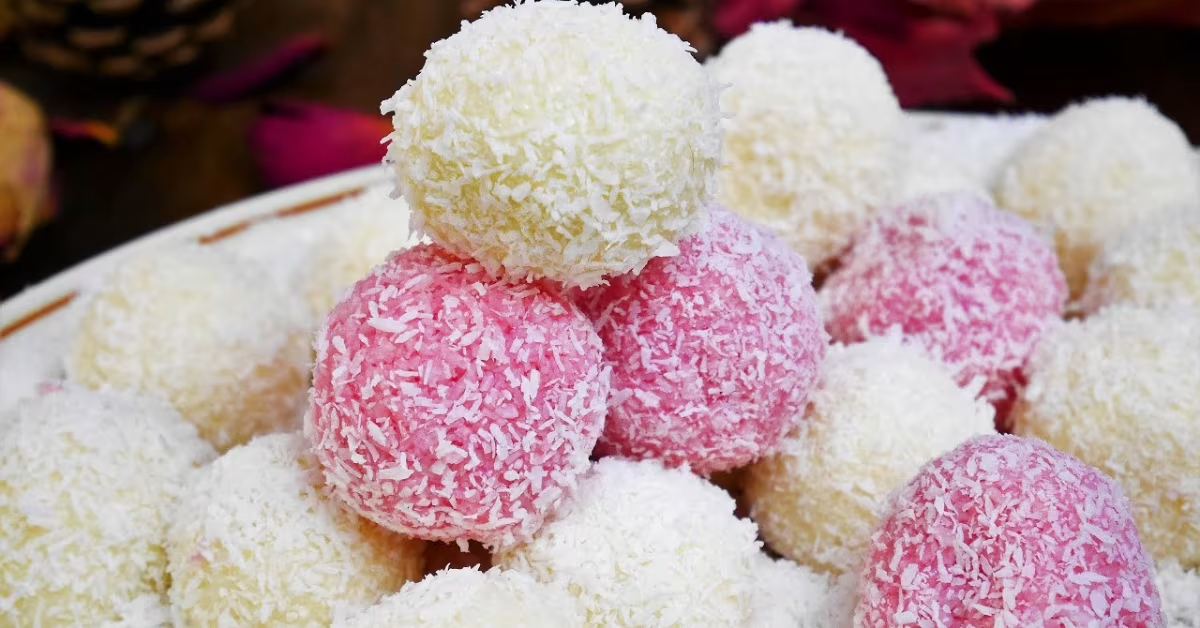
Snow balls are a traditional Moroccan pastry made from desiccated coconut, softened butter, icing sugar, and sometimes a touch of vanilla or orange blossom water for a delicate lift. Their name comes entirely from how they look: round, white, and lightly dusted with icing sugar, they sit on a tray like a small cluster of snowballs, which, given Morocco's climate, carries a certain charm.
They are dry pastries, but not in any austere sense of the word. They are crumbly, melt-in-the-mouth, and balanced in their sweetness in a way that never tips into the cloying excess you might sometimes brace yourself for with Middle Eastern sweets. They are served at family celebrations, weddings, Ramadan gatherings, and in any Moroccan home where guests are welcomed with proper care.
Unlike gazelle horns, those crescent-shaped almond paste pastries found in every patisserie from Tangier to Marrakech, snow balls have a lighter, less dense texture and a simplicity of ingredients that makes them accessible to just about everyone, including those with nut allergies.
How to make them
The good news is that snow balls are among the easiest Moroccan pastries to recreate at home. No specialist equipment needed, no hard-to-find ingredients. A few simple staples, a little patience, and you are there.
The core ingredients are desiccated coconut, softened butter, icing sugar, one egg, and a few drops of vanilla extract. Some recipes add a splash of milk to loosen the dough; others fold in a little flour to help the balls hold their shape.
The method is straightforward. Beat the butter and icing sugar together until smooth and creamy, then work in the egg, vanilla, and coconut gradually until the dough is soft and easy to shape. Roll into small balls roughly the size of a walnut, place them on a lined baking sheet, and bake at 170 degrees for around fifteen minutes, until the undersides are just golden but the tops are still bright white.
The secret is to roll them in icing sugar while they are still warm, straight out of the oven, so the powder clings properly and forms that fine snowy coating that gives them their name. With kids involved, this step has a habit of turning into a cheerfully messy shared moment in the kitchen.
Where to Find Snow balls
In Morocco, snow balls turn up in traditional patisseries, those small, colourful shops where pastries are stacked behind glass displays in an appetising jumble that makes you want to try everything at once. You will also find them in markets, in the souks, and sometimes from street vendors selling mixed Moroccan pastry assortments by weight.
For the most authentic experience, look for neighbourhood patisseries where locals actually shop. These are the places that make the best snow balls, following family recipes passed down across generations, with no compromise on ingredients.
They are usually sold by weight or by the piece. Expect to pay between one and three dirhams each, which amounts to just a few euro cents, making them one of the most affordable treats in the entire Moroccan pastry repertoire. For a family, a small bag of snow balls from a local patisserie is as close to free as food gets, and the kind of taste memory that lingers long after you have flown home.
A Final Word
Snow balls are Moroccan pastry without pretension. They do not need any staging or presentation to win you over. A single bite is enough to understand why they have passed from generation to generation without ever going out of fashion.
Bring some home in your luggage, try the recipe when you get back, or simply eat them as you wander through the lanes of a medina. Either way, you will not be disappointed.
Register
By entering your email address, you agree to receive our newsletters by email and you are aware of our Privacy Policy.