Batbout: the stuffed Moroccan bread you'll want every day
One bread, one filling, and an instant obsession
Moroccan street food is a category entirely of its own. It is not food you eat out of desperation, not something you settle for when nothing better is available. It is a culture, a daily art form, and stuffed batbout is one of its most delicious and approachable expressions.
A soft, pillowy flatbread cooked on a griddle, packed with spiced meat, vegetables, fresh herbs, and a sauce that gets all over your fingers. That is batbout. Easy to describe, impossible to forget.
History, Culture and Ingredients
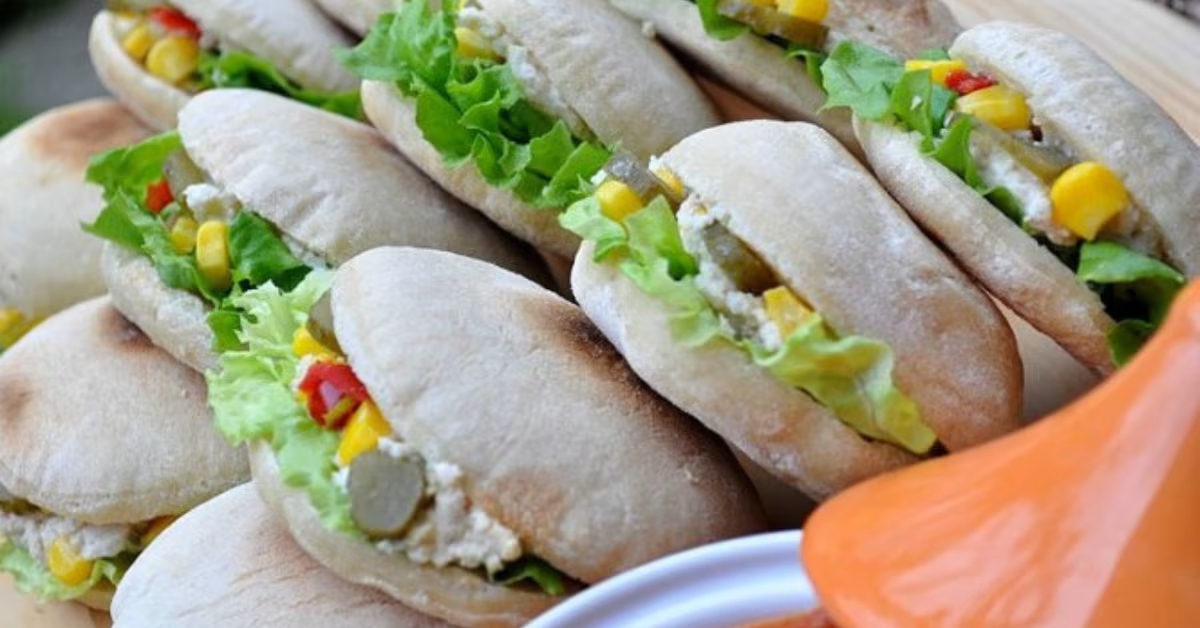
Batbout is a traditional Moroccan bread, round and thick, cooked dry on a hot griddle rather than baked in an oven. It is that cooking method that gives it its distinctive texture: soft and yielding on the inside, lightly golden on the outside, with an open crumb that soaks up sauces like nothing else and turns every bite into something generous and deeply satisfying.
Originally, batbout was eaten plain, at breakfast, with butter and honey. Then someone had the bright idea of stuffing it, and the rest is Moroccan street food history. Today the fillings vary by region, vendor and season, but the classics remain: spiced kefta, herb-marinated chicken, tuna with olives and peppers, and increasingly, grilled vegetable versions for the growing number of vegetarian options appearing in larger cities.
Spices are everywhere. Cumin, paprika, coriander, parsley, sometimes ras el hanout, work their way into every preparation and give batbout a boldness that sets it miles apart from anything resembling a European sandwich. Unlike msemen, the flaky pan-fried crepe you find on every corner from Casablanca to Essaouira, stuffed batbout is eaten standing up, on the street, with zero ceremony. That is a large part of the appeal.
The variations are endless. Some vendors go with melted cheese, others fold in scrambled eggs for something even more indulgent. Every batbout is its own small surprise, and that is exactly how it should be.
Where to Eat Stuffed Batbout
The great thing about batbout is that it does not hide. You will find it in covered markets, at street food stalls throughout the medinas, and in small neighbourhood eateries where a woman standing behind a hot griddle turns out fresh bread to order with a quiet efficiency that commands genuine respect.
Skip the pre-wrapped versions some tourist cafes sell. A batbout that has been sitting under clingfilm for two hours has very little left to say for itself. The real thing is eaten hot, seconds after being filled, while the bread is still soft and the stuffing is still steaming.
For families, it is an ideal option. Children tend to love the handheld format, and milder fillings like herb chicken or tuna work well for younger or more cautious palates. Do not hesitate to ask for it without harissa if you are travelling with small kids; most vendors are well used to the request.
On the budget front, it is hard to beat. Expect to pay between 10 and 25 dirhams per batbout, which comes to under two euros, making it one of the best value-for-money bites in the entire Moroccan street food scene.
A final word
Stuffed batbout is Morocco without the fuss. Proof that a great meal does not need white tablecloths or a wine list to leave a mark.
When you find yourself in a Moroccan medina, follow the smell, look for the small griddle, and order without overthinking it. You can thank us later.
Register
By entering your email address, you agree to receive our newsletters by email and you are aware of our Privacy Policy.