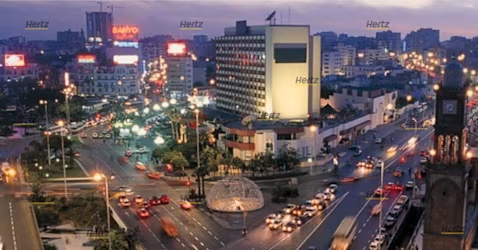
United Nations Square in Casablanca
Picture a massive roundabout where all of Casablanca's energy converges. That's it right there: Place des Nations Unies is exactly that. The beating heart of Morocco's economic capital, a crossroads where modernity meets colonial heritage, taxi horns mingle with animated chatter over coffee.
If you're landing in Casa for the first time with your kids, this spot will probably be your main reference point. You cannot miss it, everyone will tell you about it. And for good reason: this is where everything kicks off, where everything connects, and where you'll truly get a feel for the soul of this buzzing city.
In this article, we'll take you through this iconic square, its fascinating history, its lively surroundings, and most importantly everything you can do there as a family. Get ready to fall for this electric city centre.
A Bit of History to Understand the Setting
Place des Nations Unies hasn't always gone by this name. Formerly called Place de France during the French protectorate, it was renamed after Morocco's independence in 1956. An obviously symbolic choice that marks the country's determination to turn the page whilst opening up to the world.
This square witnessed the birth of modern Casablanca. In the 1920s and 1930s, when the city was experiencing its architectural golden age, this is where French urban planners laid the foundations of what would become the nerve centre of Morocco's economic metropolis.
Even today, it still plays this role as a central hub. Shops, banks, government offices, hotels: everything revolves around it. It's Casablanca's ground zero, if you will. The ideal starting point to explore the entire city, whether you're on a sightseeing trip or just passing through.
What to See and Discover On and Around the Square
The Fountain and Unique Atmosphere
At the centre of the square sits a fairly simple circular fountain, but one that gives the place all its character. It's not the Trevi Fountain, sure, but it's got its charm. Kids love running around it, and it's an excellent spot to snap your first photos of Casablanca with the urban hustle and bustle in the background.
The vibe? Electric. From morning onwards, it's a constant ballet of cars, brand-new trams, hurried pedestrians, and street vendors. Yes, there's honking. Yes, it's noisy. But it's precisely this energy that makes the square so authentic, so alive.
Architecture That Tells a Story
Look up, really. The buildings surrounding the square are a proper open-air museum of Art Deco and Moorish architecture. Immaculate white facades, wrought-iron balconies, geometric ornaments typical of the 1930s: you're right in the middle of the French colonial style that shaped Casa.
Some buildings seem straight out of a film noir, with their clean lines and imposing volumes. Others display more subtle Moorish touches, like a nod to Moroccan identity resisting beneath the European veneer. For photography enthusiasts, it's an absolute treat, especially late afternoon when golden light caresses the facades.
The Arteries Leading from the Square
From Place des Nations Unies, several major avenues stretch out like the branches of a star. The most famous? Boulevard Mohammed V, that legendary palm-lined artery heading north. It's Casablanca's equivalent of the Champs-Élysées, with its shops, historic cinemas, and constant buzz. An essential stroll, even with a pushchair.
To the east, Avenue Hassan II leads you peacefully toward the waterfront and Hassan II Mosque. It's a pleasant walk, especially if you fancy reaching the corniche to breathe the Atlantic air after the city centre's excitement.
And if you want to discover a more traditional Casablanca, head southwest toward the Habous Quarter. A few minutes by taxi, you'll dive into a "new" medina, built in the 1930s but in traditional Moroccan architectural style. A striking contrast with the square's modernity, and a real breath of authenticity that children love with its small alleyways and tempting pastry shops.
How Everything Connects
Place des Nations Unies is Casa's nerve center. Almost all tram lines pass through it, taxis queue up there, and buses cross paths in cheerful organized chaos. If Marrakech has its Jemaa el-Fna as a rallying point, Casablanca has its Place des Nations Unies as its urban center of gravity.
What to Do Around Place des Nations Unies
Shopping for All Tastes
Fancy air-conditioned shopping centres? Morocco Mall isn't very far, though you'll need to grab a taxi to get there. But right around the square, you'll find clothing boutiques, bookshops, souvenir shops, and even some international brands that children will recognize.
For more traditional purchases, wander the adjacent streets where small shops sell handicrafts, babouches, spices, and textiles. Less touristy than the souks of Marrakech or Fez, certainly, but also less crowded and more authentic in approach.
Cafés and Restaurants: Where to Set Down Your Bags
Cafés are everywhere around the square. Some are proper Casablanca institutions where regulars sip their black coffee whilst watching the world go by. Others are more modern, with terraces and free Wi-Fi for digital nomads.
For food, you'll be spoilt for choice. From small street restaurants serving Moroccan sandwiches (try the kefta bocadillo, teenagers will love it) to fancier spots for a real family meal. Moroccan cuisine is everywhere: tagines, couscous, pastillas... Enough to introduce kids to new flavors without taking risks hygiene-wise.
A tip? Café Maure, a bit further down Boulevard Mohammed V, offers a lovely menu of Moroccan pastries that little sweet tooths will appreciate. Gazelle horns, chebakia, makrout: it's the perfect snack after a day of wandering.
Cultural Activities Within Reach
Want culture? The Al-Maghrib Bank Museum is just steps away, with exhibitions on Morocco's monetary history. Granted, it rarely fascinates children, but if you're curious to learn more about the country's economic heritage, it's free and quick to visit.
For film buffs, several historic theaters line Boulevard Mohammed V. Cinema Rialto, notably, still displays its period Art Deco facade. Even if you don't go in, the building is worth a photo stop.
Recommended Walks with Children
From the square, set off on a leisurely walk along Boulevard Mohammed V to the Arab League Park. It's Casablanca's green lung, with its majestic palm trees, shaded paths, and playgrounds where kids can let off steam. Count on 15-20 minutes on foot, or 5 minutes by taxi if little legs get tired.
Another nice option: head down to the waterfront via Avenue Hassan II. The walk is long, but you can cut it short by hopping on the tram, which always amuses children. The goal? Reach the corniche and Hassan II Mosque for an end-of-day facing the ocean.
Practical Information for Visitors
How to Get There
If you're staying downtown, you'll probably get there on foot. Most upscale hotels are located less than 15 minutes' walk away. Otherwise, the tram is your best mate: clean, modern, air-conditioned, and dirt cheap (about 7 dirhams per ticket, less than a quid). Line T1 stops directly at Place des Nations Unies.
Small taxis (the red ones) are everywhere and relatively honest in Casablanca, especially since meters have become mandatory. Count on 15-30 dirhams for a ride in the centre. With children and bags, it's often the most practical solution.
For the more adventurous, walking from the port or Casa-Port station takes about 20 minutes. A brilliant way to soak up the Casablanca atmosphere right from arrival.
Safety Tips
Casablanca is generally safe for tourists, and Place des Nations Unies is no exception. It's extremely busy, so you'll rarely be alone. That said, some common-sense precautions are necessary:
Keep an eye on your bags and cameras, especially in crowds or at café terraces
Avoid flashing valuable items or large wads of bills
If approached by vendors or "fake guides," a polite but firm no usually does the trick
With children, hold their hands firmly when crossing, as traffic can be quite chaotic around the square
No need to be paranoid, just vigilant as in any big city.
What You Need to Know Before Going
Language: Primarily Moroccan Arabic (darija) and French are spoken. In tourist areas, you'll also find English speakers, but French remains the most useful language in Casa.
Money: Cash machines are all around the square. Prefer withdrawals at banks rather than isolated ATMs. The Moroccan dirham is the local currency (1 euro = about 11 dirhams, or roughly 13 dirhams to the pound). Keep small change for taxis and cafés.
Dress code: Casablanca is a fairly westernized city, but remain respectful. Shorts and t-shirts are absolutely fine, but avoid overly short or revealing outfits, especially if you plan to visit a mosque afterward. For children, no particular constraints.
Wi-Fi: Most cafés offer free connection. Ask the waiters for the password and they'll give it to you with a smile.
Conclusion: Why You Shouldn't Miss This Square
Place des Nations Unies isn't just a roundabout on a map. It's the pulse of Casablanca, the place where you'll truly feel the overflowing energy of this city that never sleeps. Between its fascinating architecture, constant buzz, and strategic position for exploring the entire centre, it absolutely deserves one or several visits during your stay.
Whether you're there for a quick stopover or an extended family holiday, make it your base camp. Take time to sit on a terrace, observe Casablancans living their lives, wander the adjacent boulevards. It's there, in this urban effervescence mixed with colonial charm, that you'll understand why Casa fascinates as much as it bewilders.
Fancy extending your Casablanca adventure? Check out our other articles on Hassan II Mosque, the Habous Quarter, or the Ain Diab corniche. Casa will soon hold no more secrets for you!
Register
By entering your email address, you agree to receive our newsletters by email and you are aware of our Privacy Policy.