The Sefrou Cherry Festival: A Unique Celebration in the Heart of Morocco
Morocco is no stranger to festivals, but this one has a flavour all of its own. Each year, as summer begins, the small town of Sefrou transforms into the cherry capital of the kingdom, welcoming thousands of visitors who come to celebrate this plump red fruit at a vibrant, colourful fair. Parades, music, the crowning of a queen, gourmet markets: for three days, this peaceful town in the Middle Atlas comes alive with infectious energy. If you are seeking an authentic experience far removed from the usual tourist trails, the Cherry Festival could well be the highlight of your Moroccan adventure.
Sefrou lies just thirty kilometres from Fez, nestled at the foot of the Atlas Mountains. It is a town built to human scale, with an ancient medina, refreshing waterfalls and a gentle pace of life that stands in stark contrast to the hustle of the great imperial cities. The kind of place where you feel welcome from the moment you arrive.
The Cherry Festival: A Tradition Dating Back to 1920
The Cherry Festival is not a recent invention designed to attract tourists. It dates back to 1920, during the French protectorate era, making it one of the oldest festivals in Morocco. Originally, it was created to celebrate the cherry harvest, as Sefrou was, and remains, the country's principal cherry-growing region.
Why cherries? Because Sefrou's climate, cool and humid thanks to its altitude and the surrounding watercourses, provides ideal conditions for cultivating this delicate fruit. The orchards surrounding the town produce tonnes of cherries each year, renowned for their sweet flavour and firm flesh, and the locals have made them a source of considerable pride.
Over the decades, the festival has evolved whilst retaining its popular spirit. What began as a simple agricultural fair has become a major cultural event, blending rural traditions, folk performances and modern festivities. In 2012, the Cherry Festival was inscribed on Morocco's Intangible Cultural Heritage list, an official recognition of its significance to local identity.
Today, the event attracts visitors from across the country and beyond, yet it has preserved the good-natured, accessible character that makes it so appealing. This is far removed from sanitised or over-commercialised festivals: here, it is a village fête on a regional scale.
What Happens During the Festival?
The Cherry Festival typically spans three days, and the programme is packed, in the best possible sense.
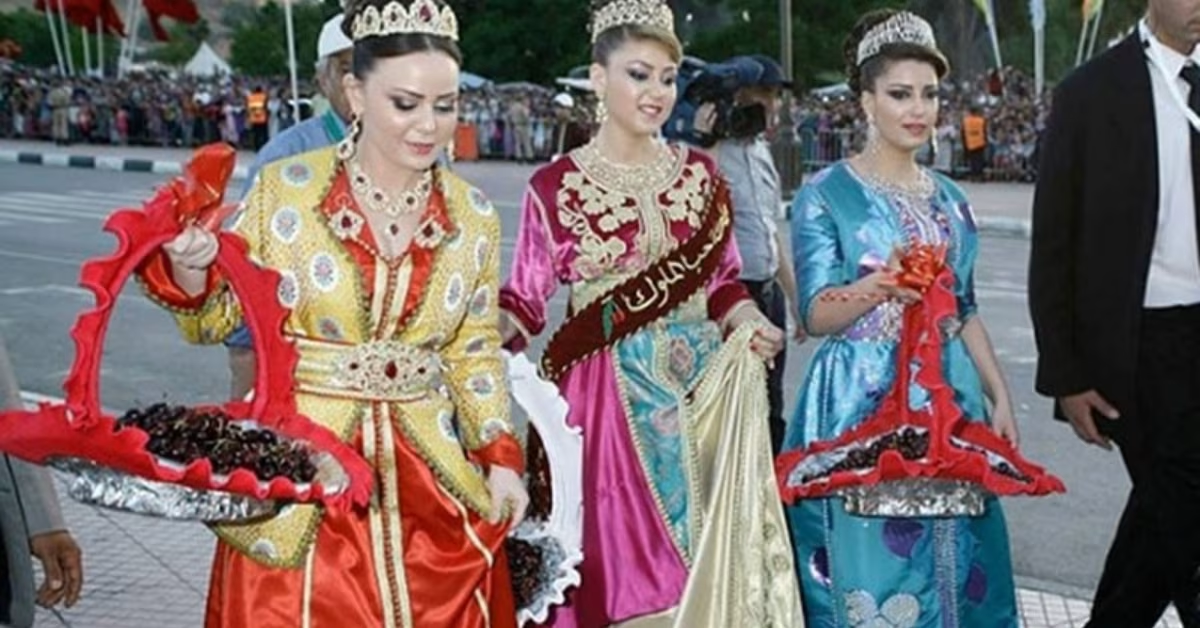
The most eagerly anticipated moment is undoubtedly the election of the Cherry Queen, affectionately known as "Miss Cerisette". Young women from the region compete for this honorary title in a festive, light-hearted atmosphere. The winner then parades through the streets of Sefrou, crowned and dressed in her finest attire, to the applause of the crowd. It is somewhat kitsch, somewhat old-fashioned, and that is precisely what makes it so endearing.
The parade of decorated floats constitutes the other highlight of the festival. Dozens of floats, adorned with flowers, colourful fabrics and, naturally, cherries, traverse the town to the rhythm of brass bands and percussion. Residents from different neighbourhoods compete to present the most spectacular float, and the atmosphere in the streets is electric. Children adore it, and so do their parents.
Throughout the festival, folk performances animate the squares and alleyways. Traditional music ensembles, dancers in regional costumes, popular singers: there is always something to see or hear, often free of charge, in the open air. It is an opportunity to discover Middle Atlas musical traditions that one simply does not encounter in the major tourist cities.
And then, of course, there is the cherry market. Stalls overflowing with fresh fruit, sold by the kilogram at remarkably competitive prices, alongside artisanal jams, cherry-based pastries, juices and syrups. One tastes, compares, purchases, and leaves laden with bags. It is generous, indulgent and convivial, precisely what one expects from a village fair.
The overall atmosphere is that of a popular, family celebration. One encounters grandparents who have attended every year for decades, children running between the stalls, groups of friends picnicking in the shade. There are no barriers, no VIP areas; everyone mingles and enjoys themselves together. It is simple, joyful and profoundly human.
Sefrou: A Town Worth Visiting in Its Own Right
Even outside the festival period, Sefrou merits a visit, and it would be a shame to leave without exploring its treasures.
The medina of Sefrou is one of the oldest in Morocco, predating those of Fes and Marrakech by some considerable margin, and it has been placed on UNESCO's tentative World Heritage list. Its narrow alleyways, whitewashed houses and carved wooden doors bear witness to a rich past, when the town served as an important trading post on the caravan routes. One wanders through with pleasure, without the crowds or constant solicitations of the larger tourist medinas.
The mellah, the former Jewish quarter, tells another chapter of Sefrou's history. Until the mid-twentieth century, a substantial Jewish community lived here in harmony with the Muslim population, and traces of this coexistence remain visible in the architecture and layout of the neighbourhood. Disused synagogues, houses with balconies, silent alleyways: it is a moving testament to a plural Morocco that has largely disappeared elsewhere.
The waterfalls of Oued Aggai offer a natural retreat just steps from the town centre. Water cascades over rocks, forming pools where locals come to cool off during the hot summer days. It is an ideal spot for a family picnic or simply to unwind after visiting the medina. Children love to paddle, whilst parents appreciate the shade of the trees.
The atmosphere in Sefrou, generally speaking, differs markedly from that of the major tourist cities. Here, there are no pushy vendors, no unofficial guides, no inflated prices for foreigners. The residents are welcoming, curious about what brings you here, and delighted to share their local pride. One feels less like a tourist, more like a traveller, and that makes all the difference.
Planning Your Visit: Practical Information and Recommendations
When does the festival take place? The Cherry Festival is held each year in June, typically during the second or third weekend of the month, though exact dates vary depending on the harvest and the official calendar. Do check a few weeks before your trip to ensure you do not miss it.
How to reach Sefrou? From Fes, allow approximately thirty minutes by car along a pleasant road that winds through the countryside. Shared grand taxis also operate between the two towns for a few dirhams, which is convenient if you do not have your own vehicle. During the festival, additional shuttle services are sometimes arranged.
Where do the festivities take place? The main events are held in the town centre, around the central square and adjacent streets. The parade passes through much of the town, so you will have no difficulty encountering it if you are present. Stages are erected for performances, and the cherry market occupies several streets.
Admission? Access to the festival is entirely free of charge. Only certain indoor performances may require payment, but the vast majority of festivities take place outdoors and are open to all.
Accommodation? Sefrou has a handful of hotels and guesthouses, but availability is limited and rooms book up quickly during the festival. If you have not reserved in advance, Fes offers an excellent alternative with a far broader selection of riads and hotels across all price ranges, and the proximity makes return journeys straightforward.
Arriving early? This is strongly recommended, particularly on the day of the main parade. The best viewing spots along the route are claimed from early morning, and the afternoon heat can be taxing if you are standing in direct sunlight. Arrive early, settle in comfortably, and enjoy the spectacle.
Visiting with children? The Cherry Festival is ideal for families. The atmosphere is good-natured, activities are plentiful, cherries appeal to all ages, and the absence of oppressive crowds makes getting around easy, even with pushchairs. Do bring water, hats and sun cream, as the June sun can be quite fierce.
What to bring back? Fresh cherries, naturally, if you have a means of keeping them cool during your journey. Otherwise, opt for artisanal jams, syrups or local pastries, which make excellent edible souvenirs to share with friends and family.
Six Activities to Enjoy in the Region
The area surrounding Sefrou abounds with treasures, and if you have a few days to spare, here are six unmissable activities to combine with the festival.
Visit the medina of Fes: just thirty minutes away, Morocco's spiritual capital awaits with its UNESCO-listed medina, legendary tanneries and sumptuous palaces. It is another world entirely, more intense and more chaotic than Sefrou, but utterly fascinating.
Hike in Ifrane National Park: cedar forests, mountain lakes, fresh air and marked trails. This is the green lung of the Middle Atlas, ideal for a family day's walking or a nature escape away from the heat of the plains.
Discover the town of Ifrane: nicknamed the "Little Switzerland" of Morocco, this mountain town surprises visitors with its steep-roofed chalets, manicured gardens and impeccable cleanliness. One could almost believe oneself in Europe, which creates a striking contrast with the rest of the country.
Explore the cedar forests and observe Barbary macaques near Azrou: the forests surrounding Azrou are home to colonies of Barbary apes, those mischievous monkeys that delight children. A pleasant stop along the route, with opportunities for picnicking beneath centuries-old cedar trees.
Swim at the sources of Oum er-Rbia near Khenifra: these spectacular springs, where water gushes from the rock in multiple cascades, offer an idyllic setting for a day of relaxation. Swimming is possible in certain pools, and the on-site restaurants serve freshly grilled fish.
Drive the Middle Atlas lake route: Dayet Aoua, Dayet Ifrah, Aguelmam Sidi Ali... These mountain lakes, often deserted, offer breathtaking landscapes and opportunities for hiking or peaceful picnics. A car is essential, but the drive itself is part of the pleasure.
Why the Cherry Festival Is a Unique Experience
The Morocco one discovers in Sefrou during the Cherry Festival is not the Morocco of postcards. It is a festive, generous Morocco, rooted in its rural traditions and proud to share them with those who take the trouble to visit.
You will not find spectacular monuments here, nor Instagram-worthy backdrops at every turn. What you will find is an authentic atmosphere, genuine smiles, delicious cherries and the rare sensation of being welcomed not as a tourist but as a guest.
If you find yourself in Morocco in June and are seeking something different, set your course for Sefrou. You will not regret it.
Register
By entering your email address, you agree to receive our newsletters by email and you are aware of our Privacy Policy.