Cedar Forest of Jbel Tazekka
When people think of Morocco, they picture the bustling alleys of Marrakech, the sweeping dunes of the Sahara, or the sun-drenched beaches of Agadir. A cedar forest perched nearly 2,000 metres above sea level? That rarely makes the list. Yet the Tazekka National Park is very much real, tucked away in the Middle Atlas mountains just a short drive from Fès. This is a different Morocco altogether, greener, cooler, and wonderfully off the radar. If you're looking to escape the crowds and fill your lungs with fresh mountain air, the cedar forest of Jbel Tazekka might just be the unexpected highlight of your trip.
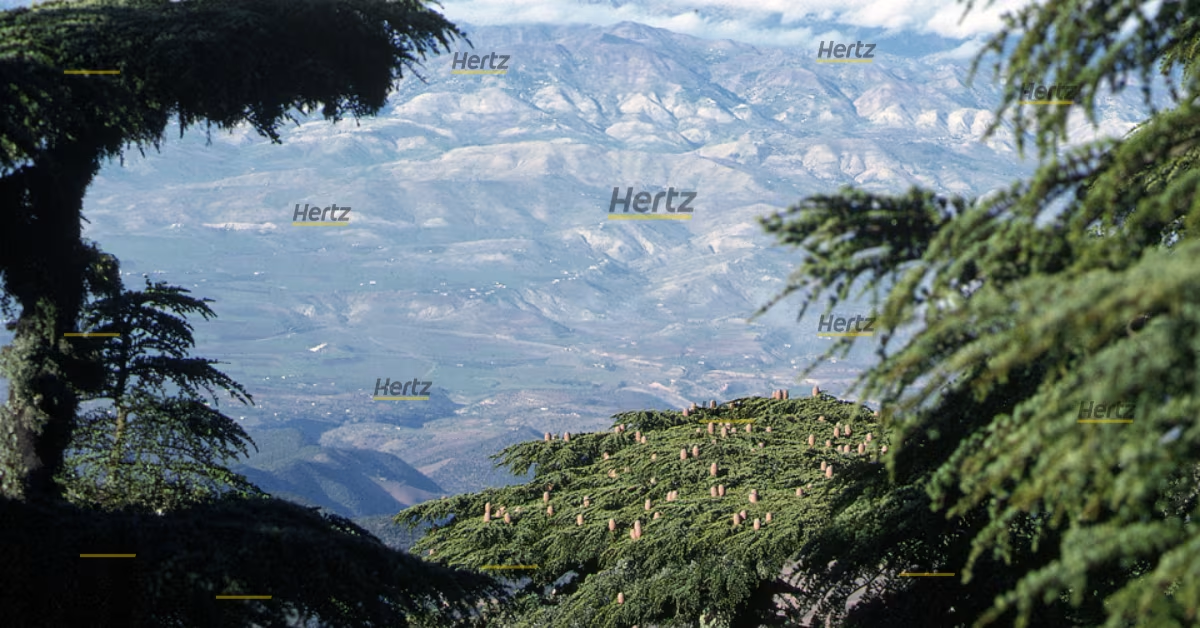
Tazekka National Park: A Hidden Natural Gem
The park lies in the Taza region, wedged between Fès to the west and Oujda to the east, an area most tourists speed through without a second glance. Big mistake.
Established in 1950, Tazekka is one of Morocco's oldest national parks, originally created to protect the cedar forest from the threat of deforestation. Since then, its boundaries have expanded to cover over 13,000 hectares of remarkably varied terrain: dense woodland, rocky ridges, deep caves, and hidden waterfalls. The landscape shifts constantly as you travel through, a bit like a Moroccan Switzerland, only wilder and far less manicured.
The park sees relatively few visitors, which is precisely what makes it so appealing. No tour buses clogging the roads, no souvenir hawkers at every turn, just nature, silence, and the occasional hiker crossing your path. For families seeking something authentic, it's a rare find.
The Cedar Forest: Walking Among Giants
For those wondering, a cedar forest, or cédraie in French, is exactly what it sounds like: a woodland dominated by Atlas cedars, those magnificent trees with their distinctive spreading silhouettes and blue-green needles that can reach heights of 30 to 40 metres. Some of the specimens here are several centuries old, and walking among them feels like stepping into another era entirely.
The atmosphere beneath the canopy is something special, almost enchanting. The light filters through the branches soft and dappled, the air stays cool even in the height of summer, and there's a constant resinous scent hanging in the air, earthy and clean. It's a world away from the stifling heat of the imperial cities, and the relief is palpable.
The forest is home to wildlife that tends to stay discreet but is very much present. The undisputed stars are the Barbary macaques, those cheeky monkeys you'll also find in the cedar forests around Azrou and Ifrane. With a bit of patience, you'll spot them clambering through the branches or sitting by the trails, and children absolutely love them, of course. You might also encounter wild boar, foxes, and a wide variety of birds for those with an interest in ornithology.
Beyond its sheer beauty, this forest plays a vital ecological role, regulating the local climate, preventing soil erosion, and feeding the springs that flow down into the valleys below. Protecting it means protecting an entire ecosystem, which is ultimately why the park was created in the first place.
Things to Do In and Around the Cedar Forest
The park offers enough to fill an entire day, or even longer if you're the type who likes to take things slow and soak up the atmosphere.
Hiking is the main event here, with a network of trails winding through the forest to suit different fitness levels. Some are perfectly manageable for families with young children, while others require stronger legs and a taste for elevation gain. The paths are generally well marked, but bringing a map or GPS is never a bad idea, especially if you plan to venture off the beaten track.
The summit of Jbel Tazekka tops out at 1,980 metres, and while the climb isn't technical, it does require a decent amount of effort. The payoff is worth every step: a 360-degree panorama stretching across the Middle Atlas, the surrounding plains, and on clear days, all the way to the Rif mountains in the north. It's the kind of view that makes you want to sit down and do absolutely nothing for an hour, just taking it all in.
The Friouato Caves are the park's other major draw, and they're genuinely impressive. This vertiginous chasm, one of the deepest in North Africa, plunges over 270 metres underground. The first chambers are accessible to anyone willing to tackle some steps carved into the rock, but going deeper requires proper equipment and a guide. The whole experience has a touch of Indiana Jones about it, and kids tend to talk about it for weeks afterwards.
The Ras El Ma waterfalls provide an idyllic spot for a refreshing break after a morning of walking. Water tumbles over the rocks into natural pools where you can dip your feet or even swim if you're brave enough to face the temperature. In summer, it's pure bliss.
Picnicking is an essential part of the Tazekka experience. There are designated areas scattered around, but nothing stops you from spreading your blanket at the foot of a centuries-old cedar and enjoying the peace and quiet. Just make sure you bring enough food and water with you, as facilities in the park are limited and it would be a shame to cut the day short because you ran out of supplies.
Planning Your Visit: Practical Information and Tips
Practical Information
How to get there? The park is accessible from Taza, a town roughly 1h30 from Fès by motorway, making it entirely feasible as a day trip. From Taza, a winding but well-surfaced mountain road leads into the heart of the park, add another 30 to 45 minutes depending on your pace and how many times you stop to take photos.
Do you need a car? Absolutely. Public transport doesn't serve the park, so hiring a car is essential if you want to make the most of your visit. A standard vehicle will handle the main road just fine, but if you're keen to explore the secondary tracks and get deeper into the park, a 4x4 will be far more comfortable.
Best time to visit? Spring, from April to May, and autumn, from September to October, are ideal as the temperatures are pleasant and the vegetation is at its best. Summer remains perfectly viable thanks to the altitude, though be aware that fire risks can lead to closures in certain areas. Winter can be harsh, with snow on the peaks, which has its own charm but makes access trickier.
Entrance fee? Access to the park is free, which is always a bonus. Only the Friouato Caves require a small fee, just a few dirhams, nothing to worry about.
Our Tips
What to bring? Sturdy walking shoes are a must, along with layered clothing since it can get cool even in summer once you're under the tree cover. Also pack plenty of water, food for the day, and a torch if you're planning to visit the caves.
Visiting with children? Absolutely doable, and the easier trails and caves are a huge hit with younger visitors who fancy themselves as explorers. Just pace yourself to match their shorter legs and keep the snacks coming to maintain morale.
Can you camp? Wild camping is tolerated in certain parts of the park, but it's worth checking with the forest rangers to find out where you can pitch your tent without any issues. Otherwise, accommodation options in Taza will suit those who prefer a proper bed.
Local guide? Not essential for the marked trails if you're reasonably self-sufficient, but highly recommended for the Friouato Caves if you want to venture beyond the first chambers. Local guides know every nook and cranny, share stories about the region, and bring a human dimension to the visit that's well worth it.
Where to Eat and Sleep Nearby
Let's be honest: you don't come to this part of Morocco for fine dining or five-star hotels. But you eat well here, simply, and you sleep soundly in the quiet, which counts for a lot.
In Taza, a handful of restaurants serve traditional Moroccan fare, think tagines, couscous, and grilled meats prepared just like home cooking. Nothing fancy, but generous, tasty, and far cheaper than the tourist hotspots where you're often paying for the setting rather than what's on the plate.
For accommodation, Taza has a few decent hotels that will do the job for a night or two. If you're after something with more character, rural gîtes and guesthouses can be found in the villages around the park, offering warm hospitality and blissfully quiet nights.
Book ahead if you're visiting during peak season or Moroccan school holidays, as options are limited and the good places fill up fast.
Top 5 Things to Do in the Region
1. Explore the Medina of Taza One of the oldest medinas in Morocco, predating those of Fès and Marrakech by centuries, Taza's old town has kept its authenticity precisely because it sees so few tourists. Narrow streets, craftsmen at work, historic mosques: it's a genuine glimpse into old Morocco, without the theme park atmosphere.
2. Hike to the Chiker Waterfalls Just a few kilometres from the park, these lesser-known falls offer a peaceful, lush setting for a family stroll. Easy to reach, beautiful to look at, and you're unlikely to see another soul.
3. Visit the Olive Groves of the Taza Plain The region produces olive oil that's renowned across Morocco, and some producers welcome visitors curious to see how it's made. Tastings are guaranteed, and you can take a few bottles home with you.
4. Take a Day Trip to Fès Just 1h30 away by road, Morocco's spiritual capital deserves at least a full day of your time. A UNESCO-listed medina, legendary tanneries, stunning palaces: it's a complete change of pace after the calm of the mountains, and the contrast is striking.
5. Go Stargazing Far from any light pollution, the Tazekka park is a prime spot for amateur astronomy. On a clear night, the Milky Way reveals itself in all its glory and you can spend hours gazing upwards, hunting for constellations. Magical for children and adults alike, and it doesn't cost a thing.
Why the Cedar Forest of Jbel Tazekka Deserves a Visit
Morocco is so much more than its imperial cities and crowded beaches, and Tazekka National Park is living proof. There's no manufactured folklore here, no picture-perfect backdrop designed for Instagram, just unspoilt nature, sweeping landscapes, and a peace and quiet that's become increasingly hard to find.
Visiting the cedar forest means discovering another side of the country, quieter and more authentic, and it's also a chance to give your children a green escape, away from screens and the noise of city life.
It may not be the most famous stop on your Moroccan itinerary, the one you mention first when friends ask about your trip. But it might just be the one that stays with you the longest, because it showed you something you weren't expecting to find.
Register
By entering your email address, you agree to receive our newsletters by email and you are aware of our Privacy Policy.