Throne Day
If you're travelling around Morocco in late July, there's a good chance you'll notice something a bit different in the air: flags everywhere, decorated streets, and a real buzz in the cities. Welcome to Throne Day, one of the country's most important national celebrations.
What Is Throne Day?
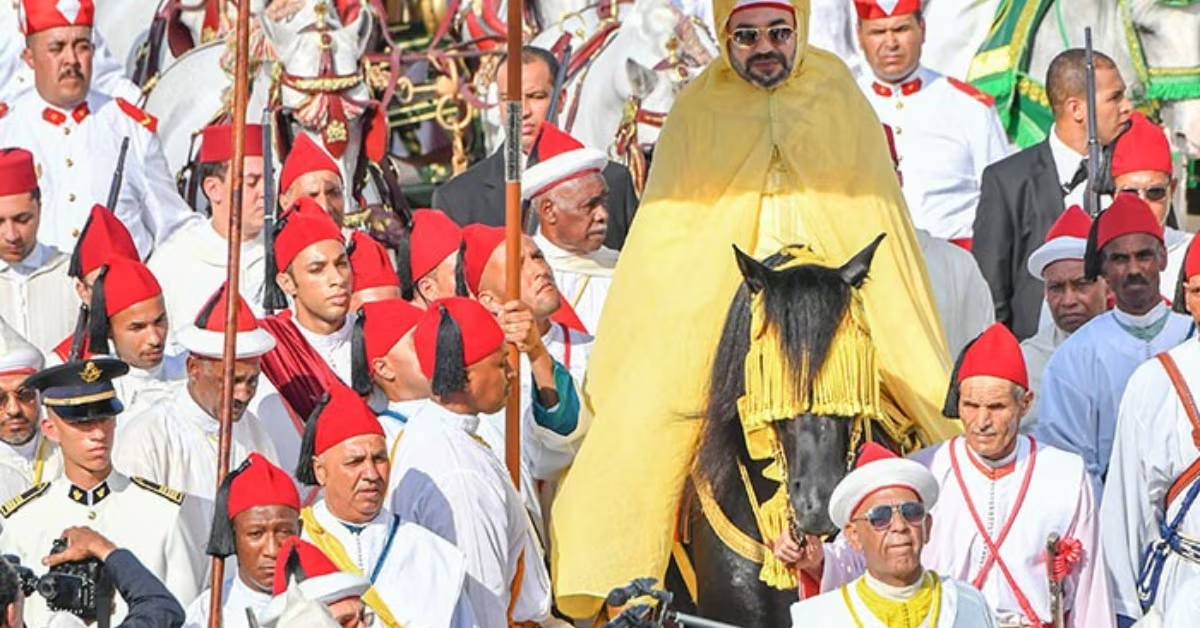
Throne Day, or Eid al Arch, is celebrated every year on 30 July. It marks the anniversary of King Mohammed VI's accession to the throne in 1999, when he succeeded his father, King Hassan II. Since then, the date has become one of the most significant on the national calendar, marked with equal enthusiasm right across the kingdom, from major cities down to the smallest villages.
It's a national holiday deeply woven into Moroccan culture, and it goes well beyond politics. It represents both the continuity of the monarchy and a shared sense of national identity, a thread running through generations.
For Moroccans, it's a moment of national pride, a bit like our 14th of July equivalent, but with a strong royal dimension on top. The monarchy holds a central place in Moroccan society, and this celebration reflects that directly. Flags, portraits of the king, official speeches: all of it is on full display, and it's hard to miss wherever you happen to be in the country.
How Is It Celebrated?
Across the country, official buildings and main streets are decked out in the red and green of the Moroccan flag. Banners, fairy lights, and giant portraits of the king cover building façades, and cities often start transforming several days ahead of the official date to get everything ready in time.
Major avenues are lit up, giving towns and cities a festive feel, almost Christmassy, except it's the height of summer, heat included. The contrast is quite amusing, especially for European visitors used to associating fairy lights with cold December nights.
The king traditionally delivers a televised speech, watched closely by the population, which often sets the tone for upcoming political and social policy. Many families gather that evening to watch it together, a bit like following a presidential New Year's address back in France.
Official ceremonies also take place across the country, including military parades, tributes, and speeches in various cities. So don't be surprised if you spot more flags and uniforms than usual on this particular day.
What Visitors Can Expect to See
You don't need to understand all the political background to enjoy the atmosphere as a foreign visitor. Most of it plays out in the streets, and it's impossible to miss. Lit-up façades, flags fluttering everywhere, café terraces packed late into the evening: you'll notice it even if you're not looking for it.
In some cities, free concerts and public events are held in the evening, open to everyone. It's a great chance to enjoy some local music, sometimes traditional, sometimes more contemporary, in a relaxed and friendly atmosphere.
It's also a good time to stumble across pop-up markets, street food stalls, and bigger crowds than usual. For anyone after an authentic, lively atmosphere, it's hard to beat, and you won't have had to plan a thing.
How It Affects Your Trip
The good news is that Throne Day doesn't usually lead to widespread closures, unlike some religious holidays. Shops and restaurants generally stay open, though some may adjust their hours slightly.
That said, expect busier city centres, particularly in the evening. If you're staying near a main road, you might want to brace for a bit more noise than usual.
What to Do During This Period
Take the opportunity to wander through major cities like Rabat, Casablanca, or Marrakech in the evening, where the lights are especially impressive. It's also a great chance to see local life from a different angle: more festive, more communal.
For families with children, the atmosphere remains friendly and perfectly safe. It's even a good opportunity to show kids a livelier, more local side of the country, away from the usual tourist spots.
Throne Day isn't, strictly speaking, a tourist attraction. But if your trip happens to coincide with it, it would be a shame to miss it entirely. It's a chance to see Morocco from a different angle, more festive, more alive, and ultimately quite telling of how attached Moroccans are to their country.
Register
By entering your email address, you agree to receive our newsletters by email and you are aware of our Privacy Policy.